Featured post

Hoe to Harvest

I am thrilled to have my essay “Hoe to Harvest: Connecting Soil, Soul and Society” be selected as a one of the winners of the WATER Essay Contest. The task was to write a 650-word essay on a topic related to feminist work for social change that springs from spiritual commitments. The contest was in honor of Rosemary Ganley, a Peterborough, Ontario feminist activist and writer whose weekly columns in The Peterborough Examiner reach a wide audience.

I hope you enjoy reading my essay below and perhaps be inspired to plant a few spring seeds!

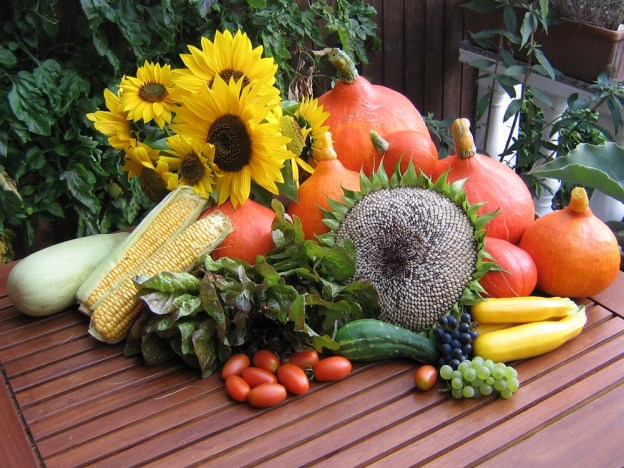
Catherine in her garden in Germany in 2014. These sunflowers planted themselves!

Hoe to Harvest: Connecting Soil, Soul and Society

It took me a long time and a good deal of sweat to understand it — just how much growing food extends beyond the garden. Not only does a garden feed us, but it also forms us – as persons and as a community. My husband and I have been growing much of what we eat for the past twenty-five years. We started out with a small plot and a few lettuce and tomato plants, but we now have enough land to keep us busy and well-fed.

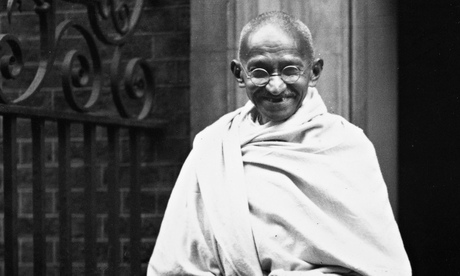
Once you work in tandem with the soil and seasons, you learn to appreciate the spiritual lessons they hold. How fundamentally attached we are to this place called Earth. How much working the land can actually help us to become fully human. As Gandhi once said, “To forget how to dig the earth and tend the soil is to forget ourselves.”

While a garden provides us with fruits and vegetables, it also acts as a mirror for the soul. As we interact with hoe, shovel and watering can upon our Earth, the Earth is ready to teach us about ourselves.

There are days when I find myself tearing at weeds, only moments later to feel the fierce roots of long-buried anger and resentment clinging to my heart. Other days I am filled with joy, longing to spill seeds upon every patch of bare soil. By gardening we create a place where our inner and outer worlds can meet. And in this space, with time and nourishment, we are encouraged to move closer to ourselves and each other.

My neighbor once explained why gardening was the humblest of tasks. “Your head is always bowed and sometimes you have to go down on your knees.” Growing food is also a revolutionary act. Physically, the small farmer spends time hoeing, seeding, planting, composting, weeding, watering, and finally harvesting – not only produce, but also the seeds for next year’s crop. Meanwhile, spiritually the farmer is creating a new way of being. As Vandana Shiva said, “The power to feed ourselves is the power to free ourselves.”

Gardening also brings us in communion with our Earth and the universe. From the millions of microorganisms alive in the soil to the moon’s phases telling us what to plant and when. The German mystic and saint Hildegard von Bingen wrote: “Humankind is called to co-create. With nature’s help, humankind can set into creation all that is necessary and life-sustaining.” What better way to co-create alongside Nature’s diversity than to bite down on a cherry tomato or munch snap green peas grown with our own two hands?

Sharing a bountiful harvest is also a way to shift the economic paradigm from exploiting the Earth to sharing her abundance. Many times I have given away (and received in return) crates of plump tomatoes, fava beans, juicy apples and plums. Sharing harvested food cultivates friendship, gratitude, and peace.

Even without much land to sow, everyone can find a way to grow something to eat. Try planting herbs in flowerpots on the windowsill or grace your terrace or balcony with larger pots full of salads, beans, and tomatoes. Otherwise, commit to buy produce from local farmers, contribute time or energy to community gardens, or plant some perennial flowers (preferably edible!) somewhere … anywhere  in your neighborhood.

Recently I planted a seed-thought that has bared fruit. At the charity where I volunteer, I suggested that we start growing food in the small plot next to where we distribute food and clothes. Together with a local cooperative that grows biological grains and legumes, charity volunteers and recipients have planted fruit trees this autumn and tilled the soil for spring planting.

The lessons gardening offers are simple. Every seed we plant holds a fruitful past and a tender promise. All we give to the soil feeds our future. And the small farmer is a humble, radical peacemaker.

Featured post

Carducci’s ‘Il poeta’ : The Poet as Blacksmith

For those of you who attended my webinar “Forging and Arrow of Gold’ last year, I am happy to announce the publication of my article in the Journal of Critical Studies in Language and Literature along with my translation of Carducci’s poem ‘Il poeta’.

Below, you can download the article “Forging an Arrow of Gold: Translation and Analysis of Carducci’s ‘Il poeta’ from a Psychosynthesis Perspective”:

To remind everyone, in Creating Harmony in Life, Assagioli invites us to:

“Reread Giosuè Carducci’s poem ‘Il poeta’ (‘The Poet’) as it expresses in a wonderful way … through which the psychic elements are fused and shaped in an inner fire, producing works of beauty.”

Inspired by Assagioli’s suggestion, I searched the internet for the poem and found it in Italian along with a translation by G. L. Bickersteth published in 1913.[1] While Bickersteth’s translation is true to the meter and rhyme of Carducci’s poem, the language itself felt antiquated – for example, his use of ‘merry-andrew’ in the third line. So, I decided to attempt to translate Carducci’s poem myself from a more literal perspective.

In the article above, I show how psychosynthesis provides an additional approach to literary criticism beyond what psychoanalytical criticism and Jungian literary criticism can offer. Then I briefly describe my translation process of Carducci’s poem “Il poeta”. Finally, as both reader and translator, I examine the archetype of the blacksmith in “Il poeta” and then analyze the poem from a psychosynthesis literary perspective.

Giosuè Carducci (1835–1907) was a poet, writer, literary critic and teacher. During his lifetime, Carducci was regarded as the official national poet of modern Italy, and today he is studied by nearly all Italian students during high school. In 1906 he became the first Italian to receive the Nobel Prize in Literature “not only in consideration of his deep learning and critical research, but above all as a tribute to the creative energy, freshness of style, and lyrical force which characterize his poetic masterpieces.”[2]

Giosuè Carducci

References

[1] Bickersteth, Geoffrey Langdale (1913). Carducci. London: Longmans, Green.

[2] “Vita, opere e poetica di Giosuè Carducci” (in Italian). 13 June 2014. Retrieved 5 January 2022.

Featured post

Joyfully Suffering the News

Yesterday I met Lucia for the first time. She is a 7-month old solid soul who has nothing but gurgling smiles for the world. Between bites of chocolate ice cream, her mother became quietly despondent. “Hasn’t the news been terrible lately?” she asked.

Headline

Yes, the news has been terrible. The news is always terrible. That’s what news is. Terrible. It is either full of suffering or full of rich, happy, famous people. Sometimes it is full of rich, unhappy, famous people suffering. But usually it consists of poor, unhappy, non-famous people suffering. In fact, Assagioli once told a student of his that, while it was important to read the news, one should only do so in homeopathic doses!

Continue reading

Posts from Christmas Past

We are less than ten days before Christmas and the 2025 is nearly finished. Here are some past Christmas posts that you might like to read between all that you need/should/ought/want/and don’t want to do. During this time of year full of darkness, I hope you can find a moment to reflect on the beauty, light, and love that is also in our midst.

Bird painting by Tagore

(Catherine, 3 years and 9 months).

Seminar Event: Reading and Reflecting for Our Renewal

Originally published in Italian in 1966 as Psicosintesi: Per l’armonia della vita, Creating Harmony in Life provides a fundamental overview of psychosynthesis by bringing together the early lectures of Roberto Assagioli. These lectures explore what psychosynthesis is and how it can be applied towards the practice of personal and spiritual self-development.

A great book for anyone new to psychosynthesis, Creating Harmony in Life is also a treasure trove for experienced psychosynthesis practitioners, with Assagioli’s nuggets of wisdom waiting to be discovered, contemplated, and put into practice.

This seminar includes 12 meetings, with each meeting focusing on one of the twelve chapters of the book. The book can be purchased on Amazon. Participants are encouraged to read the chapter that will be discussed during the month’s meeting and come prepared to share what struck, surprised, or inspired them.

See also:
5 Reasons to Read “Creating Harmony in Life”

Click here to read the Introduction to Creating Harmony in Life and see its Table of Contents and Index.

Your Presenter and Guide
Catherine Ann Lombard, M.A. translated and wrote the Introduction to Creating Harmony in Life as well as the biographical appendix: “Roberto Assagioli: A Multifaceted Life.” She is a psychosynthesis psychologist, practitioner and researcher, having published numerous scientific articles on psychosynthesis, as well as essays. Most recently, she has been exploring the relationship between Roberto Assagioli and Rabindranath Tagore, the Bengali poet and Nobel Prize winner of Literature in 1913. Currently, her book Rabindranath Tagore: A Psychosynthesis Perspective is under review by the publisher Routledge India.

Each encounter will include:
– A brief presentation by Catherine on the chapter.

– An opportunity for participants to share their overall impressions.

– A meditation focusing on the major theme of the chapter and it manifestation in the world.

Seminar Details

Time:

7 pm-8:30 pm CET
6 pm-7:30 pm GMT
10 am-11:30 am PST

Dates:

Second Sunday of the month
2025: September 14, October 12, November 9, December 14
2026: January 11, February 8, March 8, April 12, May 10, June 14, July 12, (August break), September 13

Cost: 150 EUR
You are welcome to register even if you cannot participate in all sessions.

Interested?
Send an email to loveandwill@live.com. Once you have registered, you will receive the zoom link to participate.

For more information, email Catherine Ann Lombard at loveandwill@live.com or visit Catherine’s website LoveAndWill.com

What others have said about Creating Harmony in Life

Creating Harmony in Life provides an excellent introduction to psychosynthesis, transpersonal psychology and psychospiritual development. This skillful and eloquent translation brings Roberto Assagioli’s wisdom of the transpersonal dimension of human experience to an even wider audience. In addition to Assagioli’s work, the book offers a comprehensive and beautifully written biographical chapter: “Roberto Assagioli: A Multifaceted Life.” Whether new to this work or a long time practitioner, this is an important resource that is also a pleasure to read. Highly recommended to anyone seeking to deepen connection to the wisdom and gentle, transformational power of psychosynthesis.
Susan Jewkes Allen, Executive Director Synthesis Center San Francisco

This elegant translation by Catherine Ann Lombard is a timely arrival providing a wonderful introduction to the key principles of psychosynthesis a century after they were first presented. Insightful and accessible, the book fills an important gap in Assagioli’s canon in English by describing the major concepts of psychosynthesis supported by quotes and illustrative examples. I read my copy avidly and have since recommended it to many friends and clients around the world. The current state of the planet suggests an urgent need for such ideas.
Mr Peter J Crowe


Creating Harmony in Life: A Psychosynthesis Approach
by Roberto Assagioli

Published by the Istituto di Psicosintesi, Florence
Available from Amazon
ISBN 979-12-21402-74-2

Tagore and Psychosynthesis: 5 Fun Facts

May 7th is the 164th birthday of Rabindranath Tagore (1861-1941), the Bengali poet and Nobel Prize winner of Literature in 1913. Tagore’s ability to live a rich and fully creative life remains an inspiration. Poet, author of novels and short stories, lecturer, essayist, playwriter, song writer, founder of three educational institutions, and – during the last ten years of his life – painter, Tagore’s creative approach to being in the world provides us with a model of what it means to be fully human and in relationship to everything around us.

Roberto Assagioli met Tagore in the late spring of 1926 during Tagore’s third visit to Italy. Upon their meeting in Rome, we can easily imagine the younger Italian psychiatrist’s enthusiasm for the great Bengali poet and musician. Besides being world-famous, Tagore was Assagioli’s senior by twenty-seven years, possibly evoking feelings in the latter of meeting a spiritual father.

To celebrate today, here are five fun facts about Tagore and psychosynthesis.

1. Tagore as an Ideal Model

Note from Assagioli’s Archives.

Assagioli referred to Tagore as an example of someone who has completed the process of psychosynthesis and notes that Dante’s Divine Comedy and Tagore’s writings are both testimonies of superconscious exploration. Assagioli also suggested Tagore might act as an ‘Ideal Model’ for persons seeking psychosynthesis.

Assagioli was not alone in recognizing Tagore’s wholeness as a human being. Throughout Tagore’s lifetime, many people referred to him with the appellation of ‘Gurdeva’, meaning ‘revered teacher’, a title bestowed upon him by Gandhi. Sisir Kumar Ghose (1840-1911) described Tagore as a “complete man,” and writer and poet Richard Church (1893-1972) entitled his essay about Tagore “The Universal Man”, in which he described Tagore as “an example of a harmonious man… guided from the beginning by a direct and unquestioning vision which led him toward a philosophy of wholeness, of unity.”

2. Tagore Balanced and Synthesized Polarities

Balancing polar energies is essential to psychosynthesis. Tagore clearly recognized the opposition of forces in all of creation and even in his own poetry, writing, “If the divergence is too wide, or the unison too close, there is … no room for poetry. Where the pain of discord strives to attain and express its resolution into harmony, then does poetry break forth into music.” Tagore demonstrated unity in opposites not only in his poetry but also in other areas of his life. For example, his desire to create Visva-Bharati University could be seen as a place where the opposite poles of Eastern and Western thought, culture, and religion could converge, harmonize, and synthesize into a higher level of spiritual unity.

3. Tagore Wrote About His Subpersonalities

One could say that Tagore’s authentic ‘I’ – the times when he felt most free, joyful and himself – was when he was writing poetry. However, Tagore often felt inwardly torn between himself as a poet and his conflicting subpersonalities (although he did not name them as such). In 1921 Tagore wrote: “Sometimes it amuses me to see the struggle for supremacy that is going on between the different persons within me.”

Throughout his lifetime, Tagore would struggle to integrate and ultimately synthesize his numerous subpersonalities into an authentic whole. In his letters to Charles Freer Andrews, Tagore often described the Poet within him in conflict with such inner persons as: The Preacher, Politician, Patriot, Teacher, Leader, the man who is Good, and the Prophet. In one letter he described a number of these subpersonalities having a conversation.

At the end of his life, Tagore produced ten to twelve self-portraits as ink drawings or paintings, all of which reflected his inner self. Each self-portrait is uniquely different from the others, perhaps an expression of his subpersonalities. Tagore painted or drew his facial expressions to show everything from anxiety to apprehension, from wonder to feelings of pain, sorrow, grief and ridicule towards power.

4. Tagore Described His Transpersonal Experiences

Tagore described moments when he was able to touch the Infinite and become intensely conscious of it through the illumination of joy. While Tagore did not specifically name such incidences as ‘transpersonal experiences’, he described them as “a sudden spiritual outburst from within me, which was like the underground current of a perennial stream, unexpectedly welling up on the surface.” In his book The Religion of Man, he also recognized the “realization of transcendental consciousness accompanied by a perfect sense of bliss… carrying in it the positive evidence which cannot be denied by any negative argument of refutation.” He then asserted that, while not a religion per se, such a union of one’s being with the Infinite was “valuable as a great psychological experience” (my emphasis).

One of Tagore’s earliest transpersonal experiences occurred when he was a primary school student struggling with his spelling lessons. He described how the writing appeared to him as “irrelevant marks, smudges and gaps, wearisome in its moth-eaten meaninglessness.” But then he came upon a rhymed sentence, roughly translated into English as ‘It rains, the leaves tremble’. Upon reading this sentence, Tagore was suddenly transported beyond the classroom:

“The unmeaning fragments lost their individual isolation and my mind revelled in the unity of a vision… I felt sure that some Being who comprehended me and my world was seeking his best expression in all my experiences, uniting them into an ever-widening individuality which is a spiritual work of art.”

5. Tagore and Assagioli had Similar Spiritual Philosophies

Potraits of Tagore and Assagioli by Alan C. Haras

Although Tagore and Assagioli came from different cultural and linguistic inheritances, both of their spiritual philosophies underwent a similar evolutionary process. In particular, they shared a vision of how the Infinite is expressed through the finite individual. What is perhaps most striking when comparing both men’s philosophies is that, despite their unique experiences and diverse cultural heritages and backgrounds, each managed to integrate his experiences with his knowledge of various cultural sources and spiritual traditions to synthesize a visionary understanding of the transcendental personality of humankind.

You can read more about their shared spiritual philosophy in my published article: “The Eternal Stranger Calls”: The Spiritual Philosophies of Rabindranath Tagore and Roberto Assagioli”  published in the Journal of Indian Philosophy and Religion.

Conclusion

As far as we know, Tagore was not familiar with psychosynthesis psychology, however, many of his visionary ideals and life experiences as expressed in his literary works, songs, and paintings easily correspond to many of its concepts. Undoubtedly, Tagore does provide us with an excellent example of someone who has accomplished the long process of psychosynthesis, both personal and spiritual.


Happy Birthday Rabindranath Tagore!


Many thanks to Ruchira Chakravarty for encouraging me to write this blog.