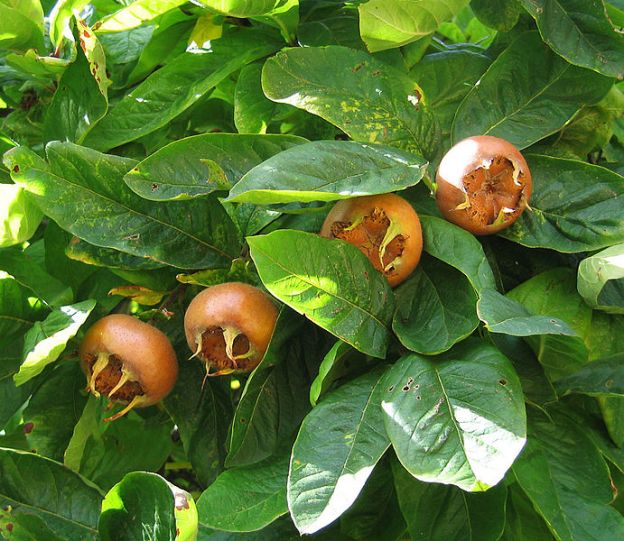
Autumn is a particular time of year. Nature is yielding the last fruits before winter and at the same time the land is becoming bare. In the Italian countryside where I live, the apple, medlar, and persimmon trees are full of ripe fruit while their branches remain bare of leaves. My husband and I are doing our best to collect what we can, but much of the bounty will inevitably end up feeding the crows or dropping to nourish the grassy fields.
This dynamic interplay between abundance and scarcity extends to our animal neighbors. Local porcupines often manage to eat the fallen walnuts and almonds before I have a chance to collect them. They instinctively know that winter promises to be long and their food meager. At the same time piles of almond shells on the ground display their midnight gorging.
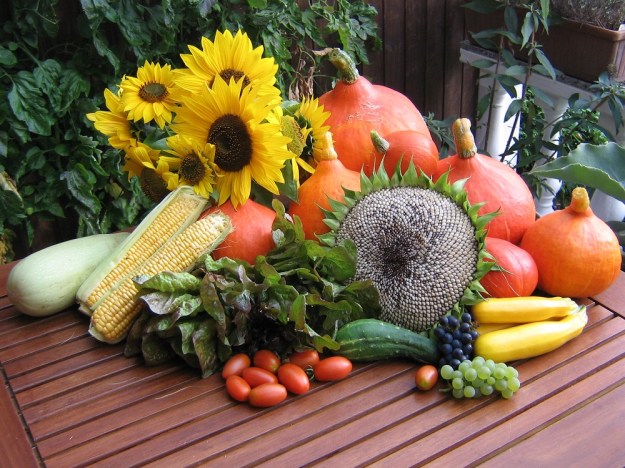
This year’s harvest from the author’s garden in Germany.
In our own lives, we might at times find ourselves struggling with scarcity—feelings of not having enough time, money, health, love, or recognition. Even when we have enough, we often feel like we need more, that tomorrow there will be nothing left. So we consume and purchase, possess, save, and hoard.
You can read more about my reflections on how the key to balancing abundance alongside scarcity in our lives is gratitude. This story was published by Daily Word (November/December 2026).
Feel free to share “Gratitude as a Balancing Act.”
My mother used to always say: “Nobody’s so bad that they can’t be used as a bad example.” One might find this advice startlingly judgmental, but surely Mom was referring to people like the US president – a perfectly good ‘bad example.’ And yet, many of the 77 million people who voted for him still believe he is a good president. Many love him. Some even see him as their Savior.
Trump is not just a good ‘bad example,’ but also a good example of an ideal model gone wrong. Assagioli emphasized our need to have what he called ‘ideal models.’ He wrote:
“Hero-worship … is a natural and irrepressible tendency of human beings and, at the same time, one of the most powerful stimuli towards the elevation of consciousness.”
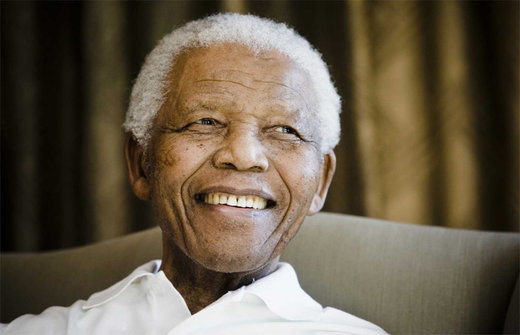
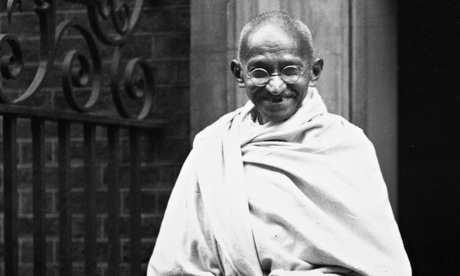
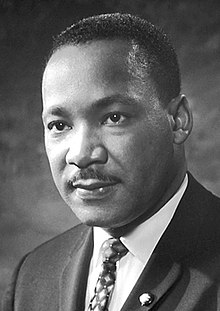
Of course, the heroes that he was referring to are human beings who exhibit the highest qualities of the human spirit, people whose qualities we are attracted to and wish to embody ourselves. People like Gandhi, Martin Luther King, Rosa Parks, and Mother Teresa. In India there is a beautiful saying related to this: “The Ganges purifies when seen and touched, but the Great Beings purify even if they are only remembered
Assagioli said that such heroes and heroines serve two diverse functions. The first and most obvious is that Great Men and Women enliven and enrich us. He wrote, “They radiate light upon us like the sun as it draws all the secret virtues from a seed.” Great Beings’ higher acts of love and will encourage us to imitate them and do the same.
Great Men and Great Women also hold the ‘image’ that we project onto their personality. Therefore, Great Men and Women are a mixture of the reality of their own personality along with the added qualities that their admirers project onto them. What is important is that this projection needs to be followed by what Assagioli calls ‘introjection,’ that is, by our ‘reactivating’ and integrating inside us the ideal that we have projected onto the other. This introjection can happen unconsciously, but as Assagioli explains:
“We can also help this process along by consciously imitating Great Beings with all our will and desire in order to possess the qualities we admire in those greats. It is appropriate to recognize and exploit this benefit that Hero-worship brings to humanity. Worship or admiration of Great Beings spontaneously and naturally evokes our urge to imitate their higher qualities. At the same time, we can help translate these qualities into actual altered behavior by consciously and actively imitating them.”
The Potential Dangers of Hero-Worship
Perhaps you can see where all this is taking us – right back to those 74 million Trump voters… Hero-Worship can easily slide down the slippery slope and become ‘idol-worship.’ Assagioli refers to such idols as inferior models who include: “some movie stars, sports and TV prize winners, successful businessmen irrespective of their character or moral stature, etc.” The problem is nearly everyone who voted for Trump, unconsciously or consciously, wants to be like him. Many have become mechanical imitations of him. Others frightening exaggerations. Trump, as an inferior model and master of the dynamic power of visual images, has been incredibly successful in getting people to be their worst selves.
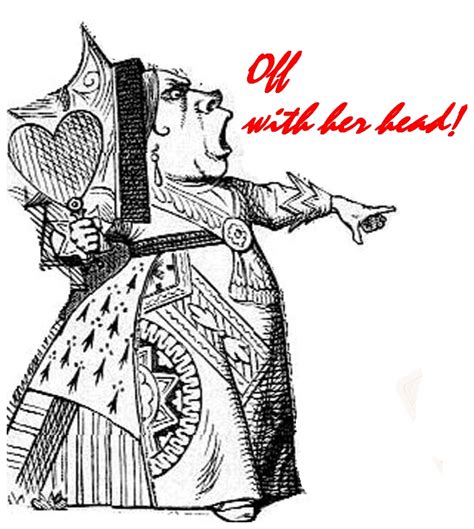
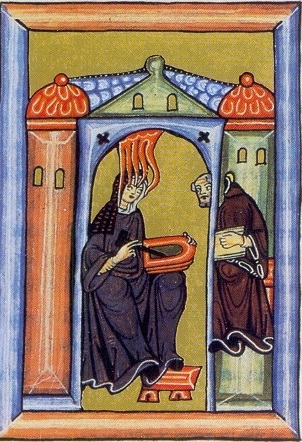
“To annihilate the self-hood of deceit & false forgiveness” (Milton). Painting by William Blake.
Assagioli suggests that one way to debunk unworthy models is to uncover their biographic narrative to reveal all their human frailties, unhappiness, and frustration. But Trump has shown his instinct for survival by crying ‘fake news,’ dismissing his failures in delusional denials, and tweeting his kudos. It might actually be too late. After all, the mental and emotional images of the Golden Hero he pretends to be seem firmly introjected in the minds of his followers.
So how do we get out of this? Ralph Waldo Emerson wrote “The world is upheld by the veracity of good men; they make the earth wholesome.” We must turn our gaze, media obsession, and internet clicks away from idols and instead honor the true heroes in our midst. Not only those heroes and heroines around us but those inside us. Emerson also said, “Other men are lenses though which we read our own minds.”
Seek those men and women who express the best inside you. Touch their cloak of wisdom and be healed. Celebrate them. Make them known. Let their light radiate your virtuous seeds of love and will. Then grow – no thrive! – and learn how to become the Great Being you are meant to be.
Rabindranath Tagore
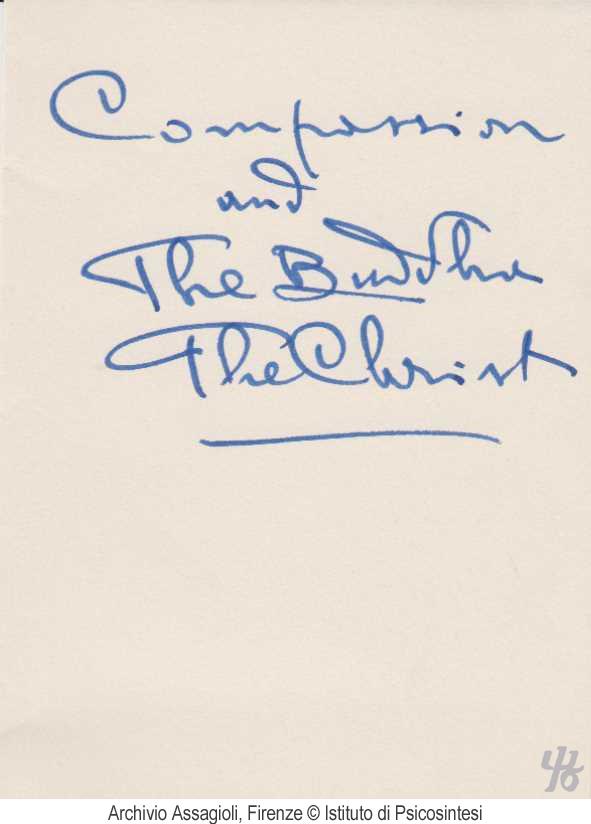
Compassion and The Buddha The Christ (from Assagioli’s Archives).
I am thrilled and honored to have a personal essay included in the recent publication of Coordinates, a digital multi-media magazine jointly published by World BEYOND War and The Sahira Collective. This beautiful magazine is full of powerful poems, artwork and essays by writers and artists from around the world, each reflecting on the notion of home and how it can become mangled and transformed, both physically and emotionally, during and after violent conflict.
My story entitled “A Glassful of Peace” describes my disorientation and loss of American identity soon after 911, my return to Egypt afterwards where I and my husband were living at the time, and our celebration of the Iftar feast with Mr. Mohammed and his family during Ramadan.
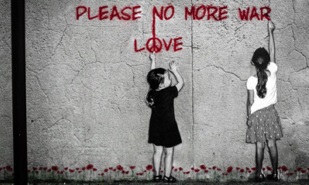
War not only unsettles, uproots, and even destroys the places we once called home. War can also bring our identity into crisis and upheaval. Coordinates is full of poignant and heartfelt stories and works of art that ask and attempt to answer difficult, yet very human, questions: What are our coordinates when home is violently torn away from us? And how do we redraw our place of being, peace, and safety in the aftermath?