While recently conducting research in Assagioli’s Archives, I came across this note by chance:
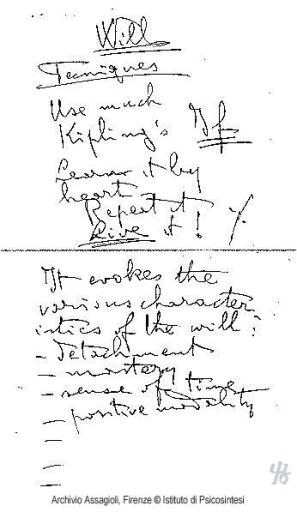 Will
Will
Techniques
Use much
Kipling’s If
Learn it by
heart.
Repeat it.
Live it!
It evokes the
various character-
istics of the will
– detachment
– mastery
– sense of time
– positive modality
In fact, Assagioli wrote this note two times, indicating that he found Rudyard Kipling’s poem from 1895 significant.
My curiosity peaked, and I quickly found the poem on the internet. My first impression was how “male” the poem felt. Written in the form of a father’s advice to his son, I found it difficult to overcome my feelings of being excluded from its message. How might this poem be different if it had ended with: “You’ll be a Woman, my daughter!”[1]
 On September 20th, those of us who have been touched by Roberto Assagioli’s vision are celebrating the first World Day of Psychosynthesis. The day is meant to establish a spiritual connection between everyone who is generating and working with psychosynthesis concepts and techniques. Each of us is encouraged to take time during the day to reflect on how psychosynthesis is a living, evolving idea that can be successfully applied through many formats and in various contexts.
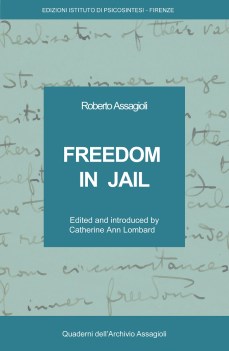 Roberto Assagioli’s “prison diary” Freedom in Jail is an autobiographical account of the month he spent in prison under the fascist regime in 1940. His conclusion is entitled “A Hymn to Inner Freedom” where he writes about every man and woman’s power to inwardly free themselves.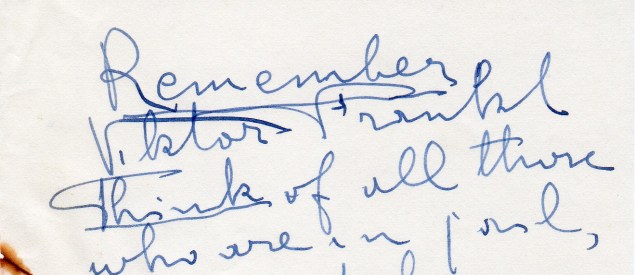
 Love and Will