Category Archives: Feelings

Playing with Dream Symbols

dreamsAssagioli wrote little about dreams or how to interpret them. Despite being a student of Freud’s and colleague of Jung’s, he felt that dreams reveal only a partial aspect of the human personality. He also believed that only part of the unconscious is able, or willing, to express itself through dreaming. He wrote that dreams that occur during the psychosynthesis process reveal the dreamer’s energetic forces, environment, and the inner world that birthed the dream.

In the last blog, I wrote about symbols and how we can consciously use them to further our personal and spiritual growth. We can also use the symbols that unconsciously appear to us in our dreams. Dreams are expressions of our life force, and the symbols that appear in them can be interpreted a multitude of ways from both a personal and collective perspective. Jung was once asked for advice from someone who had the idea of publishing a dictionary of symbols. His response was not to do it, since each symbol would require an entire book!

Jung’s general advice about how to look at a dream is:

“Treat every dream as though it were a totally unknown object. Look at it from all sides, take it in your hand, carry it about with you, let your imagination play around with it.”

Continue reading

Miss Victorious Meets Miss Silent

The Subpersonality Process

The Subpersonality Process

This is an edited excerpt from my article, ‘Coping with anxiety and rebuilding identity: A psychosynthesis approach to culture shock’, published in Counselling Psychology Quarterly. I am happy to announce that it has been included in an online article collection featuring the most downloaded articles published in Routledge Behavioral Sciences journals in 2014.

The collection features the top three most downloaded articles that were published and downloaded in 2014 in each Routledge Behavioral Sciences journal.

You can download my article (along with others you might find interesting) for free until the 30th June.

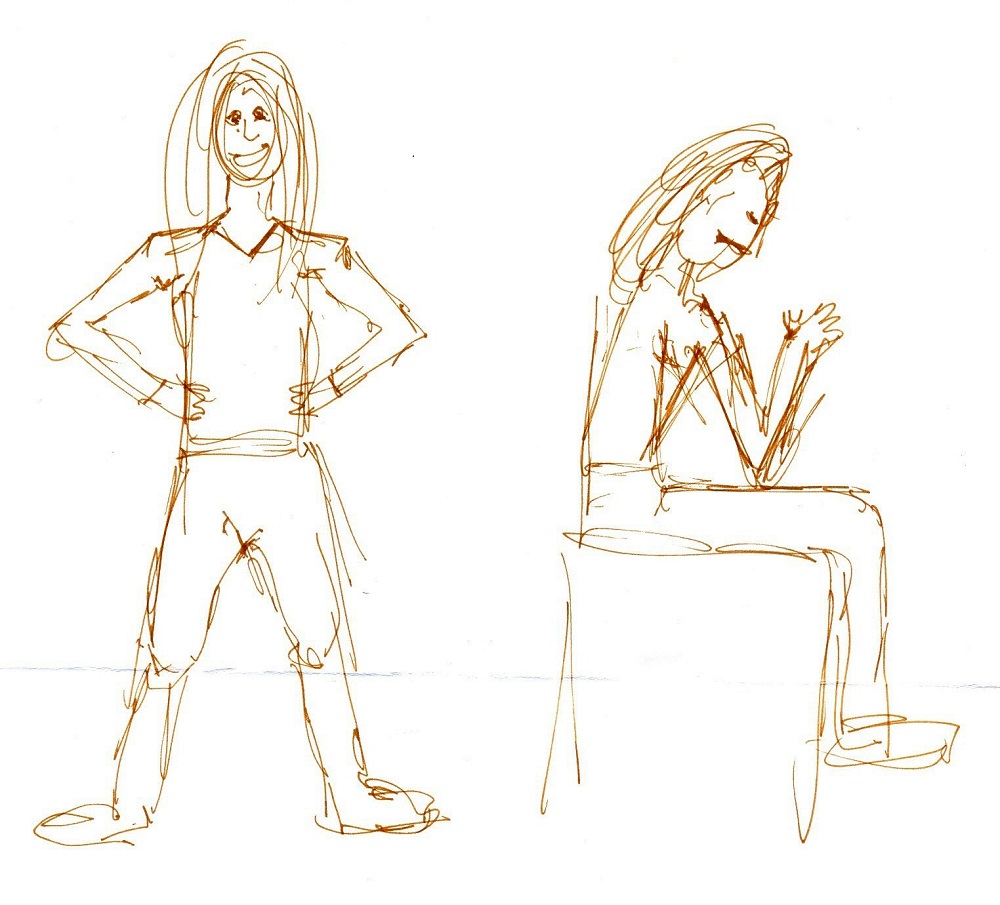
Special thanks to “Maria” for allowing me to use her drawings and testimony in this post.


Usually inner conflict is a result of two or more subpersonalities clashing because they each have different needs. You can begin to recognize your subpersonalities by being honest about the roles you play in your everyday life. For example, do you always need to be perfect at everything? Then you probably have a dominant Mr or Mrs Perfect subpersonality. Do you freeze when meeting new people in social settings? Then perhaps you have a Mr or Miss Freeze subpersonality. Your subpersonalities are revealed through the different roles you play in different situations with different people.

By first recognizing your different subpersonalities, you start your journey towards creating more harmony in your life. The subpersonality process includes the following stages: recognition, acceptance, coordination, integration, and synthesis. This process does not happen overnight, but takes patience and lifelong practice.

Maria’s Story

Reconcilation

Miss Victorious and Miss Silent

Let’s take a look at how Maria (not her real name) was able to work through the subpersonality process and integrate two conflicting, polar subpersonalities: Miss Victorious and Miss Silent. The more dominant Miss Victorious wanted to control all situations and be the best. She needed recognition and could operate in the rational world with great success. Miss Silent, on the other hand, was sensitive, deeply emotional, and more creative. She wanted acceptance for who she was and needed safety, space and time alone.

Continue reading

Intuition and the Angel Highway

Most of us felt some relief saying goodbye to 2014; the news never seemed worse. Now barely two weeks into 2015, the news seems even grimmer. We can easily fall into despair about the state of the world. But recently I listened to a discussion about the physics of angels, and, to balance the horrors we see everyday in the news, I want to bring angels into the conversation.

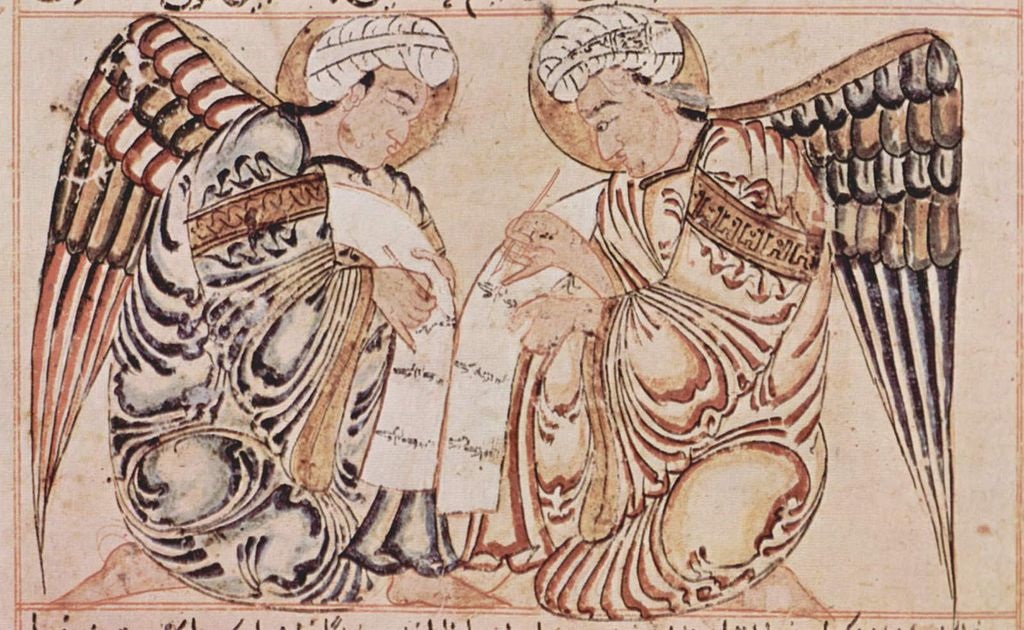
Two Islamic angels write in the Book of Life, suggesting angels' ongoing and attentive interest in human affairs (1280 A.D., Iraq)

Two Islamic angels write in the Book of Life, suggesting angels’ ongoing and attentive interest in human affairs (1280 A.D., Iraq)

During the month of Advent, I decided to paint angels that are connected with the Christmas story. I believe they do exist and are waiting for us to listen to them. The name angel derives from the Greek angelos meaning “messenger.” Angels are agents ready to guide, creatively inspire, aid, and teach us, and they have stirred the imagination of artists, writers, mystics, and ordinary persons throughout the ages, across cultures and belief. More than 80% of Americans believe in angels.

Angels approach us through dreams, visions, and meditative states and can appear in the form of voices, human or animal shapes, as male or female or androgynous beings, or as stars or light. Beings without matter, their wings are a symbol of their great spiritual energy. We delight in their cherub cuteness, but, in reality, they can also be fierce and terrifying.

Continue reading