
The Subpersonality Process
This is an edited excerpt from my article, ‘Coping with anxiety and rebuilding identity: A psychosynthesis approach to culture shock’, published in Counselling Psychology Quarterly. I am happy to announce that it has been included in an online article collection featuring the most downloaded articles published in Routledge Behavioral Sciences journals in 2014.
The collection features the top three most downloaded articles that were published and downloaded in 2014 in each Routledge Behavioral Sciences journal.
You can download my article (along with others you might find interesting) for free until the 30th June.
Special thanks to “Maria” for allowing me to use her drawings and testimony in this post.
Usually inner conflict is a result of two or more subpersonalities clashing because they each have different needs. You can begin to recognize your subpersonalities by being honest about the roles you play in your everyday life. For example, do you always need to be perfect at everything? Then you probably have a dominant Mr or Mrs Perfect subpersonality. Do you freeze when meeting new people in social settings? Then perhaps you have a Mr or Miss Freeze subpersonality. Your subpersonalities are revealed through the different roles you play in different situations with different people.
By first recognizing your different subpersonalities, you start your journey towards creating more harmony in your life. The subpersonality process includes the following stages: recognition, acceptance, coordination, integration, and synthesis. This process does not happen overnight, but takes patience and lifelong practice.
Maria’s Story
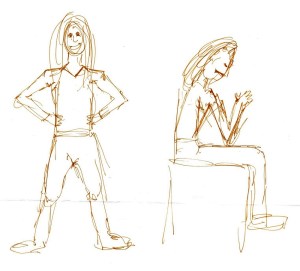
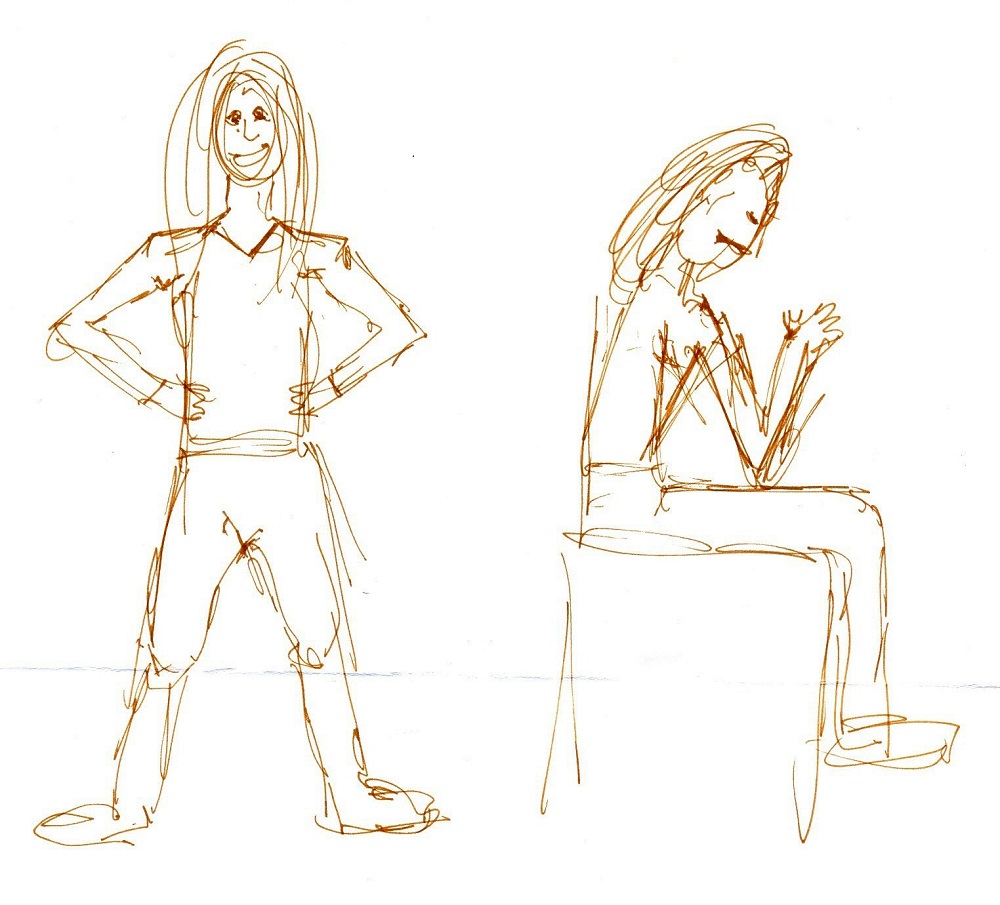
Miss Victorious and Miss Silent
Let’s take a look at how Maria (not her real name) was able to work through the subpersonality process and integrate two conflicting, polar subpersonalities: Miss Victorious and Miss Silent. The more dominant Miss Victorious wanted to control all situations and be the best. She needed recognition and could operate in the rational world with great success. Miss Silent, on the other hand, was sensitive, deeply emotional, and more creative. She wanted acceptance for who she was and needed safety, space and time alone.
Continue reading →



 Love and Will