Tag Archives: poetry

I Cannot Live Without You

I stand here ironing
t-shirts
a green dress
your shirt for work.
And think how absurd
with a genocide
not miles away.

An endless litany of words
drained of all meaning and force.
Genocide, ethnic cleansing,
displacement, occupation,
hostage and liberation.
Under siege and mass atrocities.

Words without context.
Terrorist. Nazi. Zionist. Fascist.
Hamas. Antisemitic.
Jew. Christian. Moslem.
Massacre and holocaust.

Slippery collective shadow
ruthlessly reckless.
Animal. Beast.
Less than human.
Savages.

I ease the iron across a tablecloth
as the numbers move before my eyes.
2.3 million, hundreds of thousands.
1400 dead… 3000 dead… 5000 dead… 8000 dead.
732 entire families dead.
Under the rubble dead.

Non-stop bombardment.
Whispering within
the sliver of silence
not one word.
Peace.

Only the voice of a Jewish grandmother.
Turns to her captor,
shakes his hand,
“Shalom.”
Only the voice of a Palestinian grandmother
learns her daughter dead,
her granddaughter dead,
 “Please come to me in my dreams.
   Because I cannot live without you.”

I stand and iron
your handkerchiefs,
my white summer dress
to hang in closets and place in drawers.
But how to wash and iron
this epic human tragedy?
And in what drawer
do I place it?

Please come to me in my dreams.
Because I cannot live without you.
God’s mercy.
God’s charity.
Love and kindness.
Justice.
Empathy and compassion.
But most of all
Peace.

Catherine Ann Lombard
November 1, 2023

Carducci’s ‘Il poeta’ : The Poet as Blacksmith

For those of you who attended my webinar “Forging and Arrow of Gold’ last year, I am happy to announce the publication of my article in the Journal of Critical Studies in Language and Literature along with my translation of Carducci’s poem ‘Il poeta’.

Below, you can download the article “Forging an Arrow of Gold: Translation and Analysis of Carducci’s ‘Il poeta’ from a Psychosynthesis Perspective”:

To remind everyone, in Creating Harmony in Life, Assagioli invites us to:

“Reread Giosuè Carducci’s poem ‘Il poeta’ (‘The Poet’) as it expresses in a wonderful way … through which the psychic elements are fused and shaped in an inner fire, producing works of beauty.”

Inspired by Assagioli’s suggestion, I searched the internet for the poem and found it in Italian along with a translation by G. L. Bickersteth published in 1913.[1] While Bickersteth’s translation is true to the meter and rhyme of Carducci’s poem, the language itself felt antiquated – for example, his use of ‘merry-andrew’ in the third line. So, I decided to attempt to translate Carducci’s poem myself from a more literal perspective.

In the article above, I show how psychosynthesis provides an additional approach to literary criticism beyond what psychoanalytical criticism and Jungian literary criticism can offer. Then I briefly describe my translation process of Carducci’s poem “Il poeta”. Finally, as both reader and translator, I examine the archetype of the blacksmith in “Il poeta” and then analyze the poem from a psychosynthesis literary perspective.

Giosuè Carducci (1835–1907) was a poet, writer, literary critic and teacher. During his lifetime, Carducci was regarded as the official national poet of modern Italy, and today he is studied by nearly all Italian students during high school. In 1906 he became the first Italian to receive the Nobel Prize in Literature “not only in consideration of his deep learning and critical research, but above all as a tribute to the creative energy, freshness of style, and lyrical force which characterize his poetic masterpieces.”[2]

Giosuè Carducci

References

[1] Bickersteth, Geoffrey Langdale (1913). Carducci. London: Longmans, Green.

[2] “Vita, opere e poetica di Giosuè Carducci” (in Italian). 13 June 2014. Retrieved 5 January 2022.

Synthesis—A Dynamic, Organic Unifier

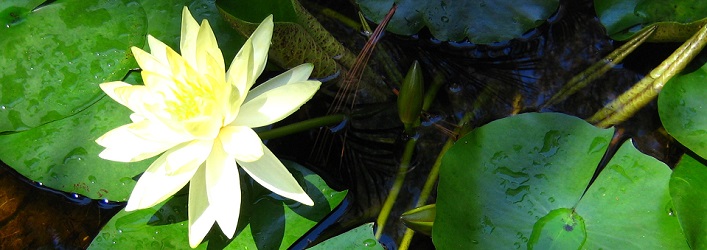
Lotus flower 3
Assagioli writes that the Lotus is a symbol of Synthesis.

Let’s take a closer look at the word ‘synthesis’. The word psychosynthesis was first used in 1889 by Pierre Janet in his book  L’automatisme psychologique. Freud spoke of the synthesizing function of the ego, but he used this word only in the sense of  re-establishing the condition existing before a split or dissociation due to a traumatic experience or to strong conflicts.

Others, such as Jung and Maeder used the words synthesis and psychosynthesis in a deeper and wider sense as the development of the integrated and harmonious personality, including both its conscious and unconscious parts. 

The word ‘synthesis’ comes from the Greek word syntithenai, in turn deriving from syn meaning “together” and thtehnai meaning “to put, place.”

Continue reading