Tag Archives: Assagioli

The Poor Man of Assisi

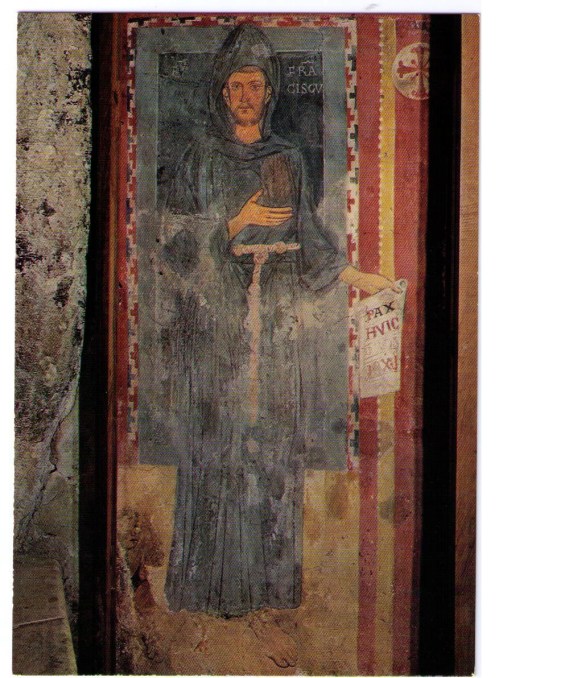
Figure 1 Francis

Fresco in the Sacro Speco (‘sacred cave’) of St. Benedict in Subiaco, possibly the oldest and most faithful image of Francis.

Pace e bene! Peace and all that is good! These words of Saint Francis (1182-1226) go beyond divisions, faiths and institutions, right to the core of our shared humanity. Today in Assisi, people are gathering to celebrate his feast day. Having chosen a life radically dedicated to transcendent values, Francis often appears in Assagioli’s writings. Assagioli would have naturally been familiar with Francis, who (along with St. Catherine of Siena) is one of the patron saints of Italy. In fact, upon meeting Assagioli, Frank Vanderlip described him as a modern day St. Francis:

“There seemed to me to burn in this man the pure flame of a love of justice and humanity… He seemed to have a calm and serene understanding of the causes of the troubles of the world and a sensible apprehension of where materialism is leading the world. He expressed such a cheerful hopefulness that a better road is at hand if the world will but take it.”[1]

Can Money and Spirituality Mix?

Continue reading

The Poem that Crossed Borders

Lotus flower 3

Assagioli writes that the Lotus is a symbol of Synthesis.

Next week I will be at Casa Assagioli in Florence, helping Gruppo alle Fonti host their International Meeting. The theme this year is “Synthesis,” a mighty big concept to come to terms with in less than a week. In anticipation, I have begun to reflect on what Synthesis means. The word comes from the Greek word syntithenai, in turn deriving from syn meaning “together” and thtehnai meaning “to put, place.”

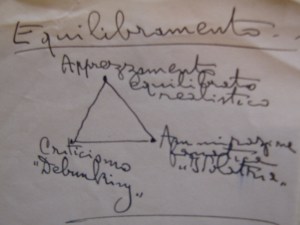
Assagioli Triangle Equilibramento

One of Assagioli’s triangles from his Archives.

The concept of Synthesis is complex because it is not only a quality or a state of being, but also a continual process, an attitude, an approach. I have written a number of blogs about Assagioli’s ideas on the synthesis of polar opposites. Basically, synthesis occurs when a pair of opposites continually interact until they are brought into equilibrium. Ultimately the opposites are transmuted into a transpersonal quality. Assagioli liked to draw triangles to illustrate his idea of balancing and transmuting these opposite energies into higher spiritual qualities. Continue reading

Threshing our Lives Anew

But I shall sing of your strength; and in the morning I shall sing of your love. For you are my defender; and my refuge, in the days of my tribulations. (Psalm 59:16)

Since moving to Italy a year ago, I often hear the word ‘tribolazione’. While rarely used in English, this word ‘tribulation’ often poetically enters Italian conversation when my neighbors are talking about a very long, difficult, and grievous period in their or someone else’s life.

thresh and ox

Farmers in some parts of the world still use a tribulum to thresh their harvest.

Hearing this word more often, I started to wonder about its origins. I soon discovered that it derives from the Latin word tribulum. A tribulum is a threshing roller or sledge pulled by oxen that farmers have used for centuries to separate the corn from the husks, the wheat from the chaff.

How often I have felt trampled by oxen as they yanked sharp flints of cut stone over me. (Well, okay. I am dramatizing, but you know this feeling don’t you?) Something inside me is being purged and discarded allowing my truer self to be freed from its hidden form. Without the tribulum, the seed of new life cannot be beaten away from the wheat, the flail, or the corn. The new seed can only lay dormant and lost. Continue reading