
Tag Archives: Assagioli

Transforming Walls and Bridges into Love

Wall over Bridge

Palestinians and international activists use make-shift bridges to cross the separation wall between Qalandiya and Jerusalem, November 14, 2014. (Photo by Oren Ziv/Activestills.org)

There’s a lot of talk about walls lately. They seem to be going up everywhere.

In Hungry, refugees are cutting through and climbing over the 4-meter high barbed wire fence that extends along the Serbian border for 110 miles. British Prime Minister Cameron has recently received EU approval to control Britain’s own borders. And Israel’s prime minister Netanyahu announced this month his intention to “surround all of Israel with a fence” to protect the country from infiltration by both Palestinians, whom he described as “wild beasts.”

Perhaps the best known wall-builder today is the U.S. political candidate Donald Trump. On numerous occasions, he has boasted about building a wall along the Texas-Mexican border and “getting the Mexicans to pay for it.” Recently, however, he was firmly, but indirectly, admonished by Pope Francis during his visit to Mexico. The Pope said:

“Anyone who thinks about building walls … and not building bridges, is not a Christian.”
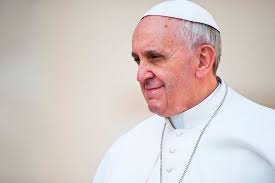
popeWhat struck me is that Pope Francis seemed to say that a Christian builds bridges AND walls. He did not denounce the walls, but simply added the bridges.

But this simple addition actually requires us to perform an extremely difficult, but necessary act of love and will.


Continue reading

Irresistible Love

Nabascha

© Copyright Nabascha

We talk a lot about romantic love around Valentine’s Day. When romantic love devours us, we can find ourselves joyfully lost, frightened, and overpowered by intense feelings of belonging. And when this romantic love-bubble bursts, we seem to deflate into a mess of hurt, broken, and overshadowed feelings of failure and unworthiness.

It seems that love, from our human perspective, is inherently limited. The love we feel for another, as partners, family and friends, seems to come with all kinds of conditions. Some of these conditions may seem quite reasonable. For example, you might feel perfectly justified to say to your spouse: “I love you, but not if you have an affair/physically harm me/gamble away all our money.” Other conditions may be more dubious: “I love you, but only if you agree with me/let me have my own way/have enough money, beauty, fame/share my beliefs/keep me from being lonely…” This list can go on and on, depending on the deep inner needs that are unmet in the individual lover.

Continue reading

Christmas Desires

Magi Icon

Ukranian icon, 17th century

Recently I realized that desire, in all its dimensions, is beautifully woven into the Christmas story. This word desire can evoke so many different images and feelings. Assagioli saw desire as an integral part of ourselves and subject to both our personal will and the will of the Higher Self.

In fact, the word desire fundamentally holds this idea of a higher or transpersonal will.  I was amazed to learn, not so long ago, that the word comes from the Latin roots dē, which means to “come from” and sīdus which means “heavenly body.” In other words, our longings literally “come from the heavens.” This idea may have originated from astrology, which attempts to understand how the heavenly bodies – stars and planets alike – can define who we are and what we want to become.

It seems to me that the journey of the three Wise Men beautifully captures the nuance held in this word. Their desire to find, exalt, and pay homage to the Prince of Peace came from and was guided by a unique and brilliant heavenly body, a bright star in the desert sky. Their deep inner desire driven by their personal will prompted them to caravan long distances across dangerous, foreign lands.

Continue reading