Category Archives: The Will

Meeting at the Well Spring – Part II

Assagioli’s archives – accumulators of energy
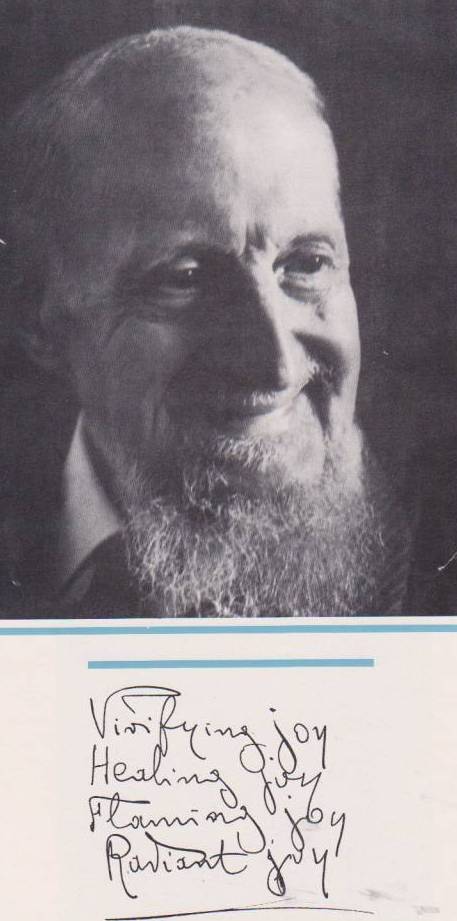
Roberto AssagioliThick blue boxes wait for us at various tables throughout the villa where Assagioli once lived, worked, and studied. Some of us move to rooms where he and his wife once slept, ate, or received guests. Windows are open and dry hot breezes waif in from the street and neighboring courtyard. At first, we buzz with excitement along with a touch of anxiety, dividing ourselves amongst the boxes like kids in a candy shop or at the school library.

Boxes labeled: “The Will—Italiano,” “Transpersonal Self—English,” “Writings of others,” “Handwritten Notes of Assagioli—English” call to us. Without much thought, I sit in front of the first free box I find, one labeled “Superconscious Material—English.” I unsnap the box’s clip, unwind the protective blue cover, and discover folders and folders of material.

Reverently I open each folder. Staring back through time are onion-skinned papers lined with typed quotations, handwritten notes, various pamphlets and letters all concerning superconscious material. Suddenly I stop shifting through these pages, frozen by a simple note of Assagioli’s: “The Will of God.” It is paper-clipped to a small book on prayer written by an American minister. The book’s margins are full of penciled notes. Double vertical lines run along the edge of a paragraph he once noted, some words in the text are underlined for emphasis. The Will of God. I shudder and cry.
It is all so much, so I stop, climb the stairs to the apartment where his principal collaborator, secretary, and the first president of the Institute of Psychosynthesis after his death, Ida Palombi, once lived with her cats. I sip black coffee, ease myself into a chair on the terrace and breathe in the room’s empty silence.
Continue reading

When Spirit and Matter Converge – Synchronicity

IMG_2149Most of us have experienced two or more events that seemed to converge in our lives in a peculiar and perhaps disturbing, yet wondrous way. For example, you might be thinking of someone you’ve lost touch with years ago, and suddenly she contacts you. Jung, along with the physicist Pauli, defined such instances as synchronistic events, a series of meaningful coincidences of events that go beyond the probability of them actually happening.

Jung and Assagioli had a long-term professional and friendly relationship that began in 1907 and lasted until Jung’s death in 1961. Assagioli acknowledges Jung’s term ‘synchronicity’ in his unpublished notes found in his archive. He mentions synchronicity as a way to understand the “correspondence between the date of the positions of the stars [astrology] and the psychological characteristics” of a person.[1]

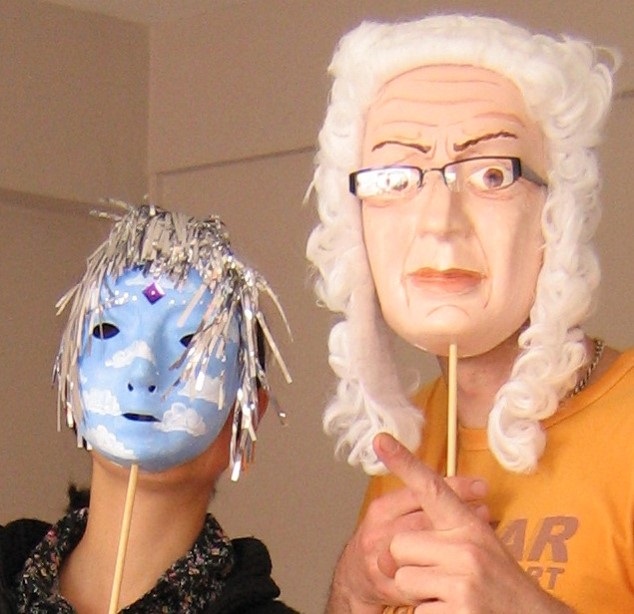
Jung, along with the physicist Pauli,   developed the idea of synchronicity.

Jung, along with the physicist Pauli,developed the idea of synchronicity.

While counseling clients, I have often experienced synchronistic events and have come to understand them as spirit seeking matter. Many people believe that spirit and matter are dualistic in nature – that spirit is ‘higher’ than matter, which throughout various cultures and time has inevitably led humankind to identify matter with evil. From my own experience, I believe that spirit actually needs matter to express itself, and the two are best when joined together in a higher revelation of universal life meaning. Synchronicity is one form of that higher expression, as are symbols and symbolic thought. Continue reading

Fulfilling Your Real Needs

The Dreamer and the Judge

The Dreamer and the Judge

A few weeks ago, we looked at the subpersonality process as experienced by Maria and her integration of two subpersonalities, Miss Victorious and Miss Silent.

As previously mentioned, the subpersonality integration process includes the following stages: recognition, acceptance, coordination, integration, and synthesis.

This week, let’s look at each of these stages in detail.

Recognition

We begin to recognize our subpersonalities when we consciously choose to identify the different roles we are playing in different situations with different people. A good place to start is with any conflicts you might be facing at the moment. In particular, what roles seem to no longer be successfully working? For example, one client strongly identified herself with a subpersonality called Stella who wanted no problems and needed perfection, control and certainty. This subpersonality was obviously challenged by the uncertainty and ambiguities we all must face in our everyday lives.

Continue reading