 In northern Europe the days are growing shorter. Except for the oak trees with their withered sienna-brown leaves, most of the trees are bare against a bleak landscape and gray skies laden with cold, damp winds. The Dutch have a saying for this time of year: De donkere dagen voor Kerstmis. The dark days before Christmas. Indeed, every day is shorter and the nights seem to stretch out like a long, endless dream.
We are in the season of Advent, which mark the days before Christmas. Advent comes from the Latin word adventus meaning arrival. We freely use the word advent to simply mean “to come into being.” This is the time of year that we await the arrival of light when the Earth will once again begin to tilt towards our sun. The days can then slowly “come into being,” promising their full splendor of sunshine and warmth at the summer solstice. For Christians, this is the time during which they await the birth of Jesus, when the Divine comes into being.
Darkness Inside
For most of us, these days are more than just physically dark. We can also become lost and overwhelmed in all the expectations of the season. The shopping, planning, cooking, baking, wrapping, cards, music, school plays, church concerts. The running and stress, travel and traffic, not to mention all the money worries.
Typically, we are expected to spend time with our families, with the idea that everyone should be happily singing songs around a piano or opening perfect presents or eating gourmet meals. But our reality may actually lead us to feeling only more lonely and unsatisfied. Under pressure by the media and our own unreal expectations, many of us become depressed this time of year and some of us may even feel suicidal.
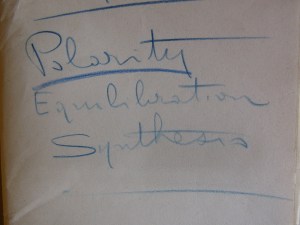
Assagioli’s notes on polarities.
Darker still are the constant reminders, between the tinsel and flashing lights, of the pain and suffering in the world. Not to mention, of course, our own pain and suffering. How can we possibly feel Joy? The entire season can feel like a sham. Bah Humbug! Where is the Higher Self in all this tragic mess?
Balancing Darkness with Light
Simon and Garfunkel once recorded a song called “7:00 News/Silent Night,” in which the familiar carol is quietly and beautiful sung. At first dimly, then more clearly and loudly, we simultaneously hear the voice of a newscaster dispassionately announcing the kind of violent and terrible news we are all too familiar with. Even though, at the end, the voice of the announcer seems to overwhelm the song, the tender voices unceasingly sing – they are not even faintly shaken.
One could experience this song as another symbol of despair – the submergence once again of peace and joy in the harsh violence of our day. But when listened to in its wholeness, the song expresses the reality that light does shine in the darkness. If we tune into the song of peace, we will be able to hear its still small voice singing clearly under the din of the crowd.
Light and dark. Joy and hatred. These are two of the many polarities that exist in the world. Our job is to learn to live with their tension in order to transform and synthesize their energies into a higher reality. Assagioli says that this process is analogous to a chemical combination when two elements are absorbed into a higher unity endowed with qualities different from what each individual element has.
Transforming Opposites into a Synthesis
The idea is to balance these opposites, hold their creative tension, and give space for a completely new and higher entity to be born. You do this by first being with the violent darkness but not identify with it. Then be with the joyful light and not identify with it either. Finally, we need to be with all that is and hold an objective understanding of the tensions between them in order to creatively seek wholeness.
Assagioli insisted that the mid-way point between two opposites is not static inside us, but rather in “a state of continuous oscillation.” We can actually experience this oscillation between Darkness and Light when we listen to the song “7:00 News/Silent Night.”
Once we can hold onto this mid-way point, then psychosynthesis can occur. It is a wise person who can play with opposites and watch with awe as they awaken and manifest into a complete formed higher quality.
So during these dark days before Christmas, practice hanging on and letting go. Hang onto the dark, and then let it go. Then hang onto the light, and let it go. Try to stand in the mid-way point by expressing Human Affection during this season. Then wait quietly and patiently for the advent of Spiritual Love that is quietly, calming, and ceaselessly singing in the world’s chaos.



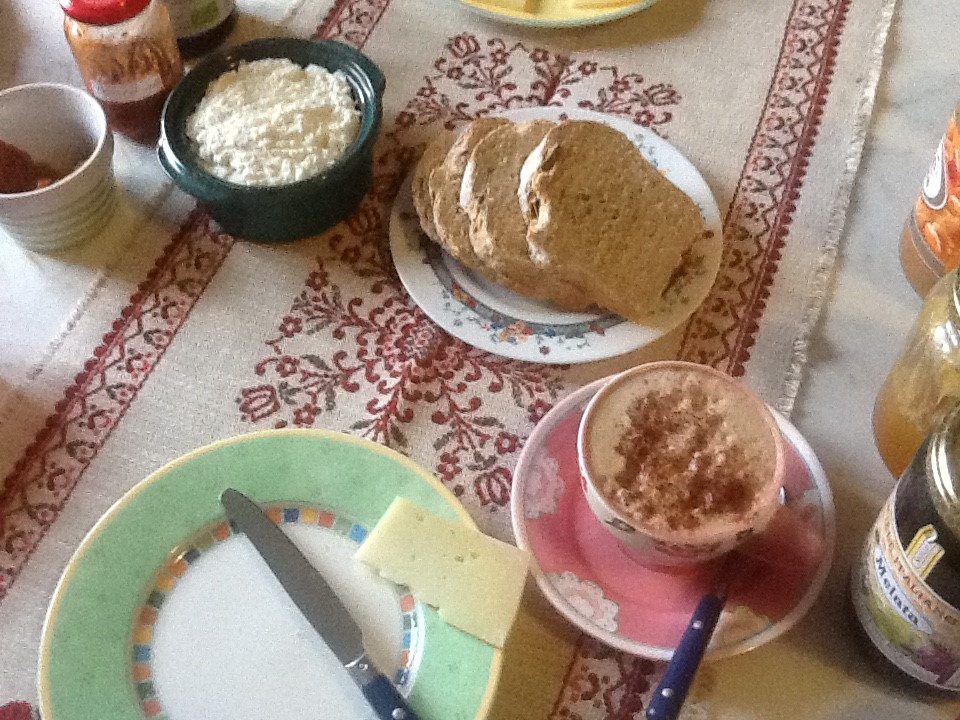 The day started out normal enough. Breakfast of homemade bread and jams, creamy sheep cheese from Sardinia, ricotta, and peanut butter from a large jar brought long ago from the Netherlands, all swallowed down with cappuccinos in our usual breakfast cups. That morning we were just a bit more rushed, hurrying out by 8 am to attend the morning mass at the Monastery of St. Luca in Fabriano.
 Love and Will