Category Archives: The Will

Living a Symbolic Life

Orthodox Baptristy Jesus

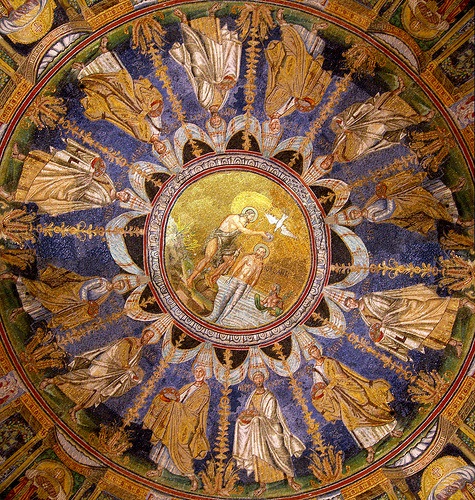
Ravenna is cold in February, but the sun still manages to warm the ancient stone archways. I place my cheek against a rough granite surface and feel the heat and energy collected over time. I have just spent the morning sitting in the Orthodox Baptistery, staring up at mosaics so carefully placed in the ceiling during the 4th and 5th centuries. The apostles march in procession above us, each carrying a triumphal laurel. In the center, John the Baptist is pouring the water from the River Jordan over the head of Jesus, who stands naked in the rippled pool. The Holy Spirit in the form of a dove dives into the blessing held aloft by John. To one side stands the pagan water god with a reed in one hand and a garment in another.

While admiring the intricate images, we are joined by two groups of Italian children. One school excursion after another quietly fills the domed building as a teacher explains the history and imagery that envelopes us. The octagonal room is relatively small and the space intimate. At one point a teacher asks, “Why did they use so many symbols in their art at that time?” Her answer: “Because the symbols conveyed la saggezza, the wisdom of that age.”

Continue reading

Miss Victorious Meets Miss Silent

The Subpersonality Process

The Subpersonality Process

This is an edited excerpt from my article, ‘Coping with anxiety and rebuilding identity: A psychosynthesis approach to culture shock’, published in Counselling Psychology Quarterly. I am happy to announce that it has been included in an online article collection featuring the most downloaded articles published in Routledge Behavioral Sciences journals in 2014.

The collection features the top three most downloaded articles that were published and downloaded in 2014 in each Routledge Behavioral Sciences journal.

You can download my article (along with others you might find interesting) for free until the 30th June.

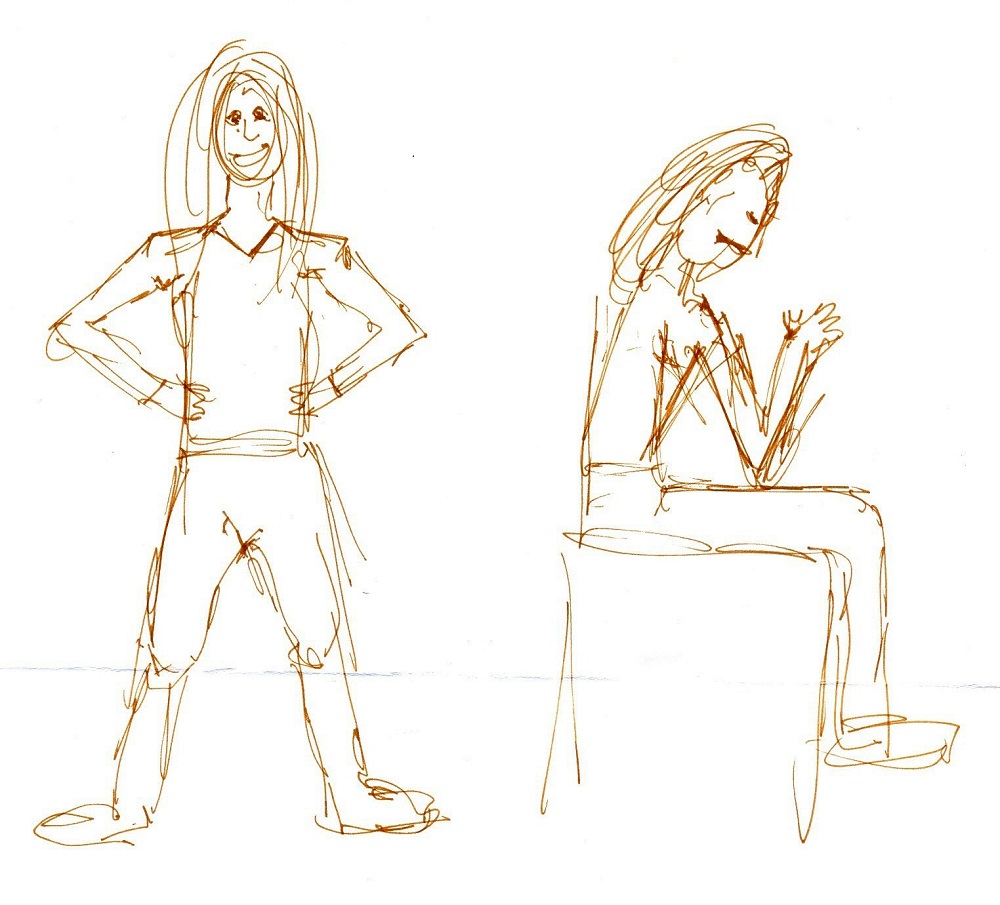
Special thanks to “Maria” for allowing me to use her drawings and testimony in this post.


Usually inner conflict is a result of two or more subpersonalities clashing because they each have different needs. You can begin to recognize your subpersonalities by being honest about the roles you play in your everyday life. For example, do you always need to be perfect at everything? Then you probably have a dominant Mr or Mrs Perfect subpersonality. Do you freeze when meeting new people in social settings? Then perhaps you have a Mr or Miss Freeze subpersonality. Your subpersonalities are revealed through the different roles you play in different situations with different people.

By first recognizing your different subpersonalities, you start your journey towards creating more harmony in your life. The subpersonality process includes the following stages: recognition, acceptance, coordination, integration, and synthesis. This process does not happen overnight, but takes patience and lifelong practice.

Maria’s Story

Reconcilation

Miss Victorious and Miss Silent

Let’s take a look at how Maria (not her real name) was able to work through the subpersonality process and integrate two conflicting, polar subpersonalities: Miss Victorious and Miss Silent. The more dominant Miss Victorious wanted to control all situations and be the best. She needed recognition and could operate in the rational world with great success. Miss Silent, on the other hand, was sensitive, deeply emotional, and more creative. She wanted acceptance for who she was and needed safety, space and time alone.

Continue reading

Six Stages of Any Decision

We are now more than half-way through January and you may want to reflect on any New Years Resolutions you have made. Most of us choose goals like losing weight, giving up smoking, learning something new, and finding a better job or relationship. Studies show that only about 2 out of 10 of us will manage to achieve our goals. When we do succeed in achieving a set goal, we often can feel joy.

New-Year-ResolutionsAs Assagioli wrote:

“Since the outcome of successful willing is the satisfaction of one’s needs, we can see that the act of will is essentially joyous.”

If you find yourself far from feeling joyous, struggling instead with your longing to change, then maybe it’s time to take a closer look at how you make decisions. Assagioli has written extensively on decision making in his book The Act of Will. He describes six stages of the decision making process: defining purpose, deliberation, choice, affirmation, planning, and execution.

Continue reading