Category Archives: The Will

Christmas Desires

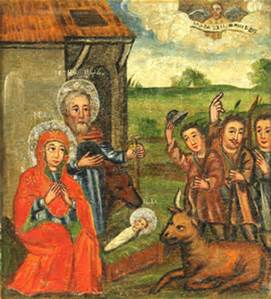
Magi Icon

Ukranian icon, 17th century

Recently I realized that desire, in all its dimensions, is beautifully woven into the Christmas story. This word desire can evoke so many different images and feelings. Assagioli saw desire as an integral part of ourselves and subject to both our personal will and the will of the Higher Self.

In fact, the word desire fundamentally holds this idea of a higher or transpersonal will.  I was amazed to learn, not so long ago, that the word comes from the Latin roots dē, which means to “come from” and sīdus which means “heavenly body.” In other words, our longings literally “come from the heavens.” This idea may have originated from astrology, which attempts to understand how the heavenly bodies – stars and planets alike – can define who we are and what we want to become.

It seems to me that the journey of the three Wise Men beautifully captures the nuance held in this word. Their desire to find, exalt, and pay homage to the Prince of Peace came from and was guided by a unique and brilliant heavenly body, a bright star in the desert sky. Their deep inner desire driven by their personal will prompted them to caravan long distances across dangerous, foreign lands.

Continue reading

The Healing Paradox

Are you like Ava and afraid of falling? Then try to fall!

Are you like Ava and afraid of falling? Then try to fall!

Ava came to see me because she had been suffering with extreme vertigo for the past three years. Uncompensated labyrintis occurs when the inner ear becomes damaged and does not heal after eight weeks. Basically, the brain must then relearn how to correct the faulty signals that are coming from the sufferer’s damaged inner ear. Until then, you can experience dizziness, imbalance, and fatigue.

Ava’s brain was taking a long time to learn how to reinterpret the signals coming from her inner ear. Hence her continual bouts of vertigo which were unpredictable and could last for days. The strange part is that dizziness is actually part of the healing process as it shows that your brain is trying to correct the faulty signals.

Despite all this, Ava kept insisting that her life, in general, was happy and that she was happy. But still there were things she missed doing like skiing and dancing. Ava (30) was married and also wanted to start having children, but she was constantly afraid of falling down and didn’t dare have a baby for fear of falling while carrying the child.

Underneath her presenting issue of vertigo, however, was another story. When Ava was 18 and just beginning university, 200 km away from home, one morning, she spoke to her mother on the phone. Later that day she received a call that her mother had died in a car accident. This tragedy was particular difficult for her for many reasons, not to mention, the accident being so unexpected and her mother’s death so sudden. Ava was an only child. And finding herself far from home, without any real friends at the new school, she had no one to go to for immediate comfort.

Continue reading

What You Put in Your Glass

Ramadan Lanterns. Photo by B. Simpson

Ramadan Lanterns. Photo by B. Simpson

Ramadan this year started on June 18th. In 2001, my husband and I were living in Giza, right in front of the pyramids. A few months after 9/11, Ramadan began and we were blessed with a special experience.

The days before Ramadan in Cairo are filled with anticipation. Paper and tinsel streamers appear across inner courtyards and wide roads. Lanterns and miniature mosques made of everything from crepe paper to recycled tin are hung and lit at night. Everyone waits for the sliver of moon to appear and to hear the official news announcing the start of the 30-day fast.

“Ten days eating. Ten days cake. Ten days new clothes. This is what they say about Ramadan,” Mr. Ashraf told us the night he drove my husband and I to his home for Iftar, the evening meal that breaks the daylong fast.

Continue reading