After graduating from the University of California Berkeley in 1987, I moved to Fukuyama, Japan—about 400 miles south of Tokyo—to teach English. People often ask why I decided to go to Japan, but the reality is that Japan chose me. At that time, I longed to take a year off and travel abroad. Having applied for English teaching positions in more than fifty countries, the school in Fukuyama was the one that invited me to come.
I arrived knowing only three words in Japanese: hajimashite (nice to meet you), arigatoo (thank you), and sayonara (goodbye), thanks to a Japanese friend who helped me learn some helpful phraes before I left. I practiced constantly.
The author at the Sanzen-in Temple in Kyoto in 1987.
I ended up staying two years in this beautiful country. I learned to speak Japanese and to read enough of the language to decipher grocery labels and train schedules, and I was blessed with making many Japanese friends, some of whom I am still in touch with 35 years later.
You can read more about my time in Japan and the transpersonal experience that I had while visiting Sanzen-in Temple in Kyoto. This story was published as a “Spiritual Journey” by Unity Magazine (September/October 2023).
Feel free to enjoy and share “A Glimpse of Infinity.” (Note that the graphic makes more sense if you open the pdf and view it in two pages!)
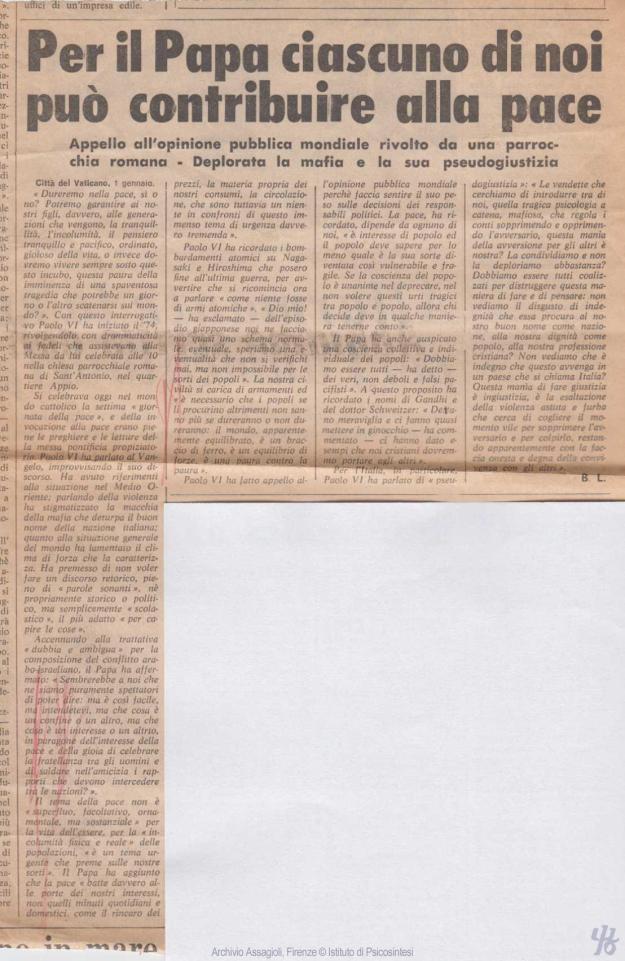
While poking around Assagioli’s online archives, searching for the words “peace” and “pace”, I came across an Italian newspaper clipping published precisely fifty years ago on New Years Day. The year was 1974, and this would be the last New Years Day Assagioli would experience as he would die on 23 August that same year at the age of 86.
The article has the headline “Per il Papa ciascuno di noi può contribuire alla pace” (According to the Pope, each of us can contribute to peace) and the text feels especially poignant given all that is happening in the world today. I can just imagine Assagioli in his study, reading through the newspaper and clipping out this article. You can see the paragraphs he marked with a red pencil held in a shaky hand.
Newspaper article dated New Year’s Day 1974 from Assagioli’s Archives
The article reiterates what Pope Paolo VI had to say on the Seventh World Day of Peace celebrated by the Catholic Church. Eerily, the first conflict that the Pope refers to fifty years ago was occurring in the Middle East. He then condemns the mafia and laments the general use of force throughout the world.
If we zoom in on what Assagioli considered worth noting, we see that he has marked what the Pope said about the conflict between the Palestinians and Israelis.
“It might seem to those of us, who are merely spectators, that we can simply say: ‘But it’s so easy…why not just try to understand each other? What does one border mean as opposed to another? What is the value of one thing as opposed to another when compared to the value of peace and of the joy of celebrating brotherhood among mankind and of welding in friendship the relations that need to be forged between nations?’
“The theme of peace is not superfluous, optional, or ornamental, but essential to the life of every person and to their physical and actual safety. Peace is an urgent theme weighing on our destinies.”
We know that Assagioli sought peace – inner and outer – all his life, even to the point of spending four weeks as a prisoner in Regina Coeli jail, in the heart of Rome. On one August night in 1940, he was arrested at his home outside of Florence, handcuffed, placed on a night train for Rome, interrogated, stripped searched, fingerprinted and sentenced indefinitely for “praying for peace and other international crimes.” Once released, he was placed under house arrest and was constantly under surveillance by the fascist government.
Domed ceiling of the entrance to Regina Coeli Prison (photo by Pietro Snider)
It appears that even in his old age – frail, ill of health, and nearly deaf – Assagioli was still praying for peace. The second section that Assagioli marked was Paolo IV’s thoughts on the atomic bombs dropped on Nagasaki and Hiroshima in 1945. The Pope spoke of the nonchalant acceptance of these horrendous acts that occurred thirty years before. He lamented that people were beginning to talk about atomic weapons “as if they were nothing.”
“My God!” the Pope exclaimed. “We’ve almost turned the Japanese episode into a normal occurrence, hopefully an occurrence that will never come to pass, yet one that is not impossible for the people’s fate.”
The article goes onto say:
Our civilization is laden with weapons and “it is necessary for people to procure them otherwise they no longer know whether they will survive or not. The seemingly balanced world is in a tug of war, a balancing of forces. It is fear against fear.”
Let us begin 2024 as Assagioli did fifty years ago during the last year of his life. Let us begin by finding the best way that we too can diminish the fear and contribute to peace – whether through prayer or action, inner spiritual awareness or outer acts of will… Let us demonstrate through our words, thoughts, and lives any and all signs of peace.
As you can see, we haven’t gotten very far in fifty years… As Pope Paolo VI said, “We all need to be true – not false or weak – pacifists. True pacifists like Gandhi and Dr. Albert Schweitzer.” Let’s start 2024 by identifying our ideal model of Peace (There are so many!) and seeking their guidance in the New Year.
For further reading, see Assagioli’s article below.
There is talk of a ceasefire, humanitarian pause, resolutions, and emergency joint summits. But Peace? Where is the Peace?
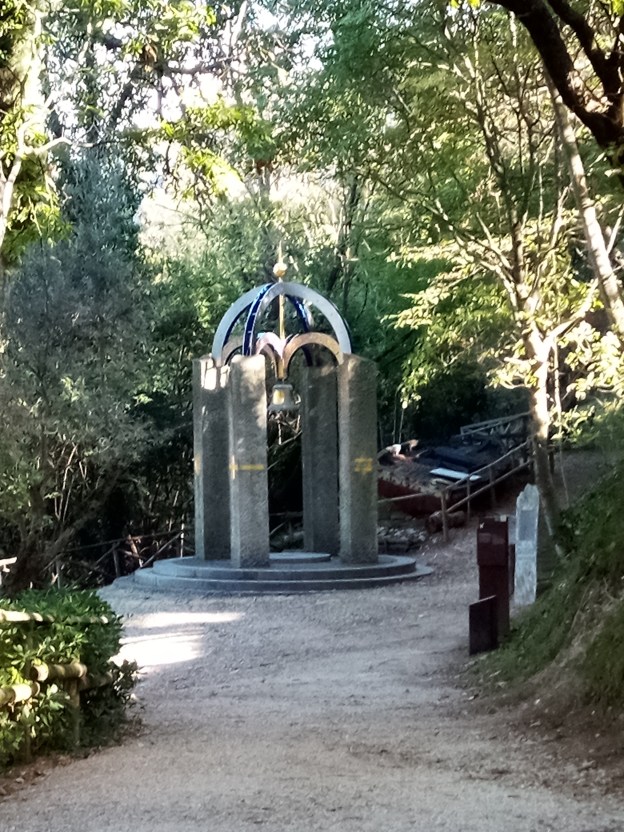
I have been searching for peace for a long time. Both inside and out. Longing for peace, I sometimes to go to Assisi, also known as the City of Peace (near my home), just to ring the Peace Bell.
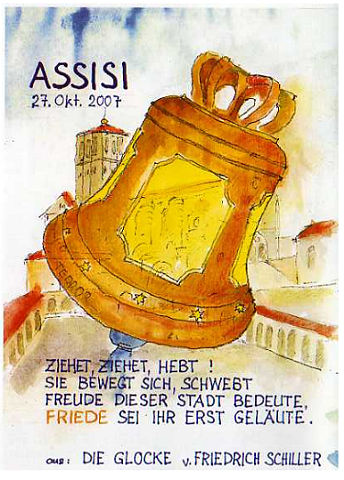
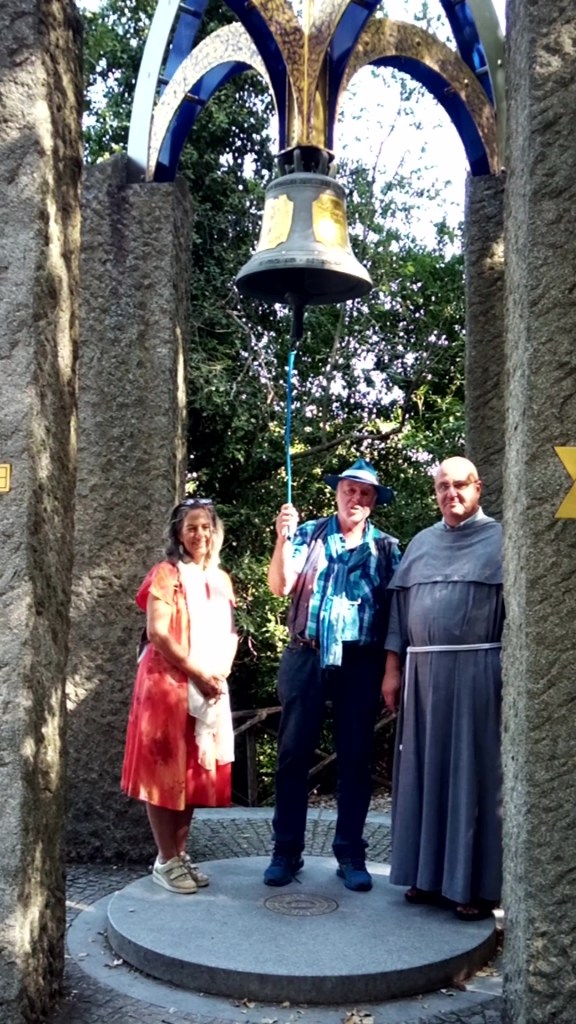
Not far from the Basilica of San Francesco, the Peace Bell is outside of the old walls of the city in the nearby woods. The bell is held aloft by four granite columns, each representing a different religion: Christianity, Judaism, Islam, and Buddhism. Designed by German artist Gerhard Kadletz, the bell is named Regina Pacis (Queen of Peace) and it unites the four religions to announce peace with one voice.
Inaugurated in 2007, the Peace Bell’s official song is “Numquam. Renascantum. Uis. Bellum. Terror.” (Never again violence. Never again war. Never again terror.) This declaration is inscribed on the lower edge of the bell along with the signatures of four religious leaders: Cardinal Ratzinger who later became Pope Benedict XVI; His Holiness the 14th Dalai Lama; Ali Gomaa, the Gran Mufti of Egypt; and Chief Rabbi of Israel, Jona Metzger.
The Author rings the bell with artist Gerhard Kadletz and Brother Thomas.
When rung, the sweet message of the Peace Bell resounds across the town and out into the world.
This Peace Bell should be ringing 24/7!
Unbind our Hearts to Ring Out Peace
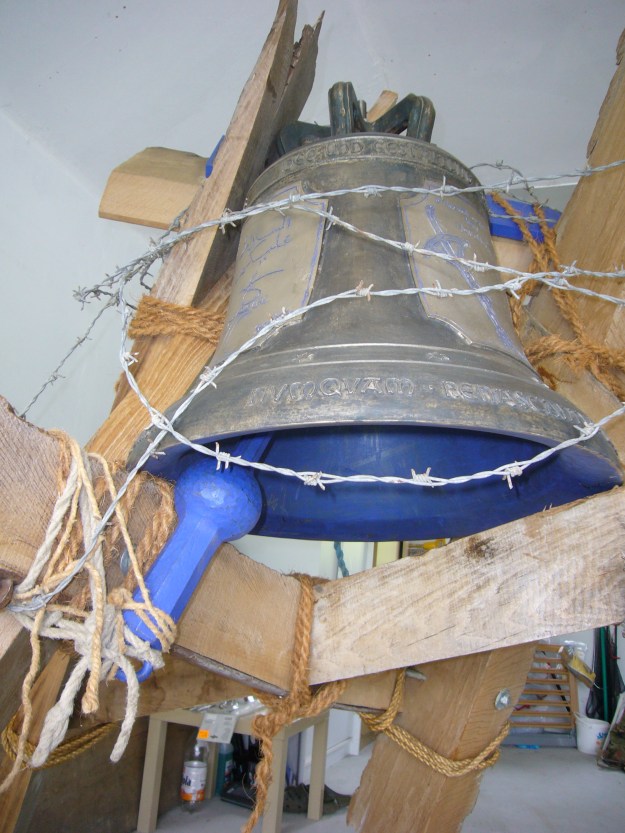
Gerhard Kadletz, the artist who created the Peace Bell, recently completed another work, entitled Wo ist der Frieden? (Where is the Peace?).
Mr. Kadletz’s new bell is an exact replica of the Peace Bell in Assisi. However, he has deliberately silenced his new bell. This bell is tightly wound with barbed wire from the Ganacker concentration camp in Germany. The bell itself precariously hangs on a 10,000-year-old bog oak that is partially charred. And the clapper is tightly tied with rope so the bell can not be rung.
May this work of art remind us of our responsibility to radiate and be disciples of peace. Peace doesn’t just happen. It requires us to engage with it, to be in relationship with it. Just as we have to pull the cord to ring the Peace Bell, so must we pull the cords of our broken heartstrings and work towards peace within. We must unwrap the barbed wire entwined around the our inner Peace Bell and unbind the rope that holds fast our clapper from connecting with the bell.
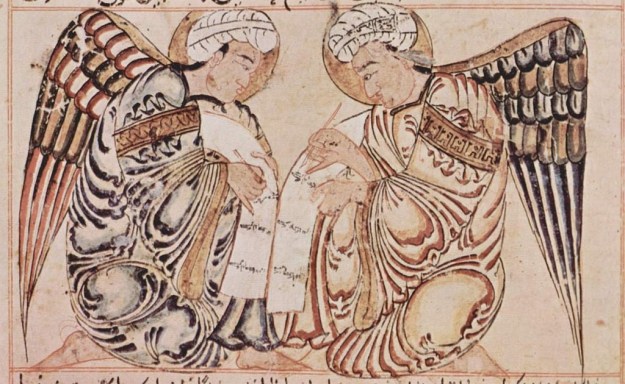
Angels are Waiting to Help Us
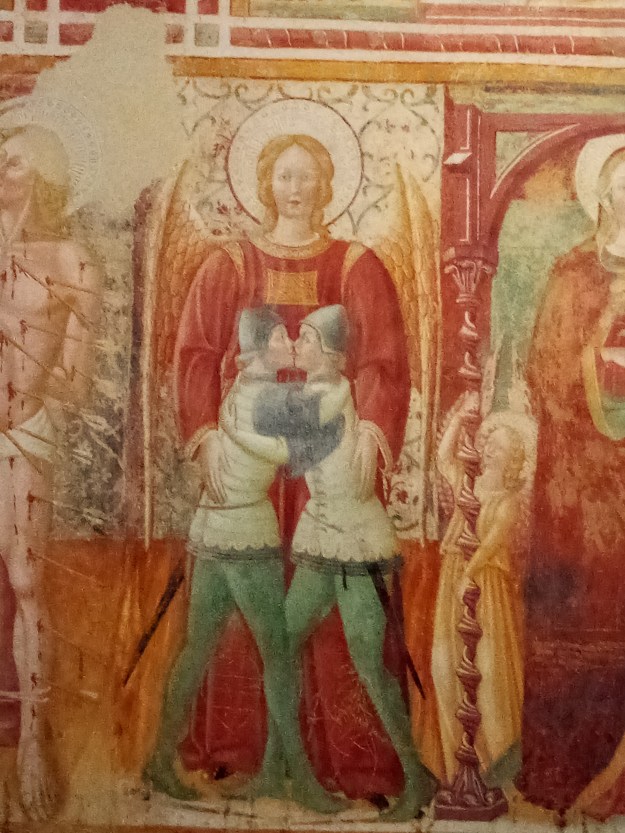
We can call on the multitude of angels around to help us. They are often hanging about, just waiting for us to ask for their assistance. In a Umbrian sanctuary near my home is a beautiful 15th-century fresco of the Archangel Saint Michael. He is the only angel mentioned by name in the Torah (Judaism), Bible (Christianity), and Qur’an (Islam). In all of three faiths, believers consider Michael an angel who fights evil with the power of good. Hence he is often depicted with a sword. During the time this sanctuary was built, the Archangel Saint Michael would have been seen as a protector of soldiers, as the angel that accompanies their souls to heaven, and as a healer. In fact, the sanctuary is built near a spring and its waters are said to have therapeutic properties.
In this fresco, we see the Archangel Saint Michael with his wings over two armed soldiers. The Archangel unites them in a gentle embrace, as they, in turn, embrace and kiss each other in reconciliation. It is said that centuries ago, one day a year, nearby warring factions would come to this sanctuary to reconcile their differences.
Let us Arrive at a Fruitful, Dynamic and Constructive Peace
Two Islamic angels write in the Book of Life, suggesting angels’ ongoing and attentive interest in human affairs (1280 A.D., Iraq)
“The Angel of Peace wraps the whole world in its big white wings…
“Some people may be helped along by the image of a big Angel, with white wings, which emanates streams of peace, spreading waves of Peace throughout ourselves, our country, the whole Earth, the human race.
“Real Peace is a peak to climb, an ideal to conquer, a point of arrival.
“True Peace has to remain steadfast before evil, in times of pain, during emotional reactions, in the midst of any kind of assault, in the face of any loss, defeat or separation.
“True Peace coexists with inner personal suffering. It is not a mood of joyfulness and delight; it produces a double life inside ourselves, till the moment when our personality appears completely regenerated, so that the inner Peace will become incarnated and the whole being permeated through PEACE, transformed into PEACE.”
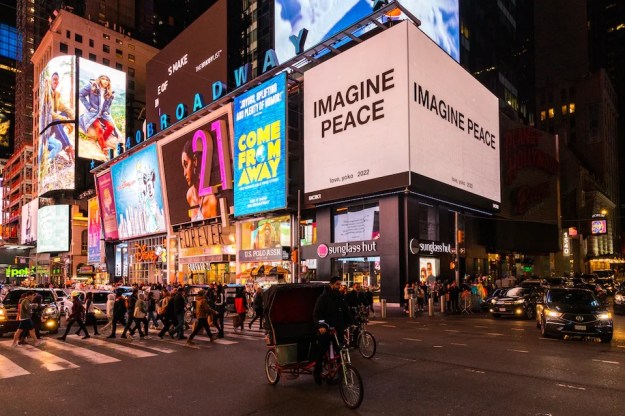
Yoko Ono displayed her message “Imagine Peace” in London, Berlin, Los Angeles, Melbourne, Milan, New York and Seoul (2022).



 Love and Will