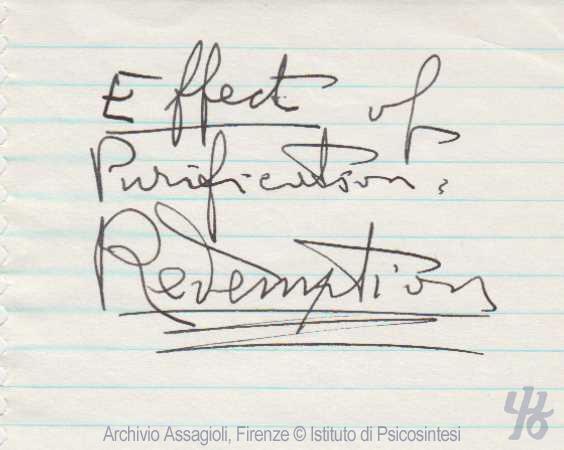

We are in the middle of Lent – a time before Easter when Christians seek purification through fasting, prayer, and charitable acts. The forty days of Lent are, in many ways, similar to the Islamic time of Ramadan, which I was fortunate enough to experience while living in Egypt. During Ramadan, Moslems are expected to fast as well as give alms and read the Qur’an.
Assagioli wrote extensively on what he called “the science of applied purification”, insisting that this work must be undertaken in order to transform the lower characteristics of our personality and bring unity to our soul. He described purification of the personality as a process of re-orientation and elevation of the higher mind. Using our will, we burn the dross of our affective and instinctual energies, habits, tendencies and passions. Once clear of the obstacles that prevent us from receiving our higher intuitions, we are free to receive wisdom from the Higher Self. In other words, purification is a necessary process that we all must endure along the journey towards personal psychosynthesis before we are adequately equipped to seek spiritual psychosynthesis.
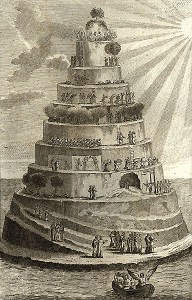
Assagioli often referred to Dante’s Divine Comedy as a “wonderful guide and description” for our personal and spiritual development. He wrote:
“The first part of Dante’s pilgrimage is a long difficult path of purification and expiation across the kingdoms of his lower nature. Divine wisdom is not revealed to him directly: in his impure, unregenerated state, still surrounded by the impenetrable veil of matter, man is unable to directly contemplate the supreme truth.”
Similarly, Evelyn Underhill, in her classic book Mysticism: A Study in Nature and Development of Spiritual Consciousness, wrote that Dante’s Purgatorio was a period of “self-stripping, which no mystic system omits.”
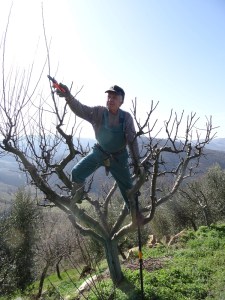
I find it interesting that Lent – this period of purification and expiation – always coincides with the time before and after the spring equinox. In the Italian countryside, now is the time to prune the olive and fruit trees, prepare the land for spring planting, clean the manure out of donkey stables, and clip back the vines. At the same time, as I walk through the open fields, rabbits and hares flash by, pheasants in their brilliant plumage call out, and deer start to appear at dusk. My neighbors’ chickens and geese are all suddenly busy laying. Often I am graced with a dozen fresh eggs.
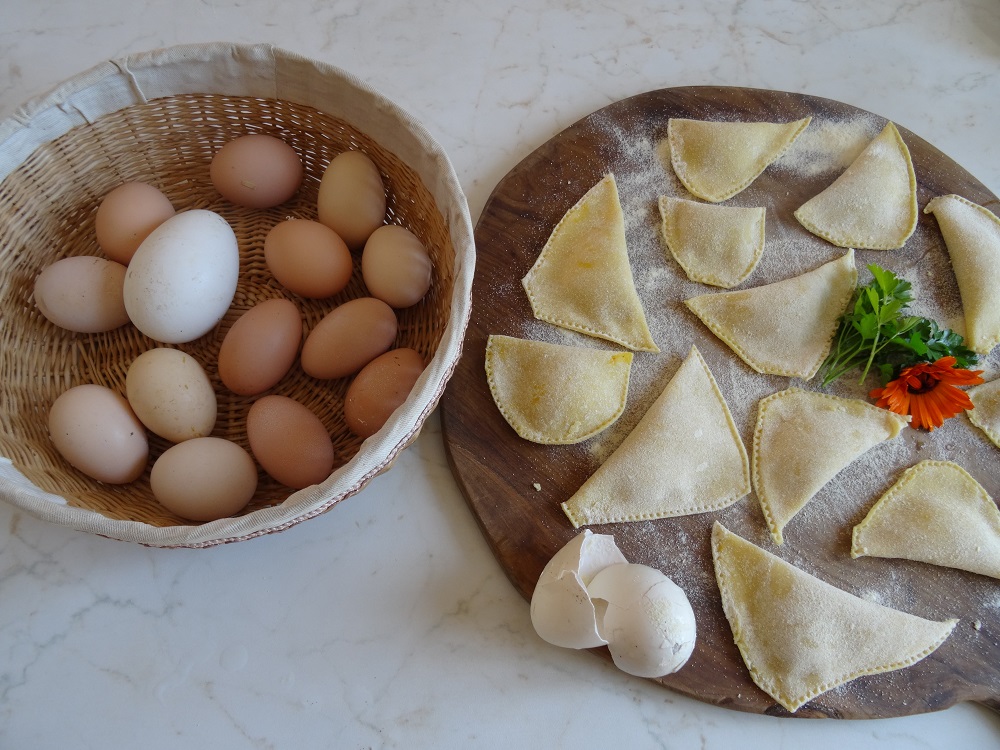
For the Italian contadini, early spring (like Lent) is a time of clearing away dead wood, burning unnecessary growth, and discarding all that is old and no longer serves. And while this process of pruning and clearing and cleaning takes place, we are simultaneously able to enjoy the beginnings of new life.
Levels of Purification
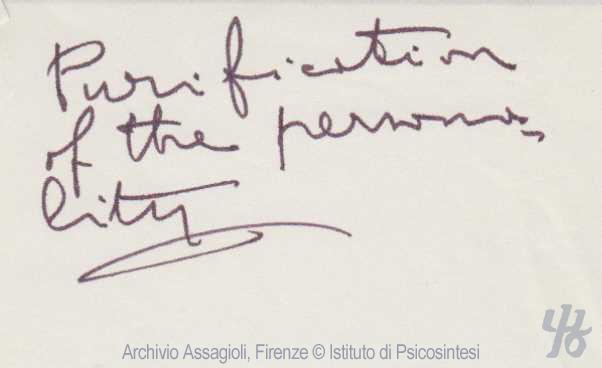
Body. Assagioli calls on us to purify ourselves on many different levels. The first step is purification of the body. This means a healthy diet; avoidance of alcohol, tobacco, drugs; and plenty of exercise, fresh air and water. However, he does warn that when we become too fixated on physical purification, we can actually hinder other more important practices.
Emotions. Assagioli insists that what is most urgently needed is purification of our emotions. We start with identifying our feelings, sensations, thoughts and desires and then disidentifying from them. He wrote:
“What is the significance of ‘purity of heart’?
Complete absence of personal desires – absence of every thought for oneself – the abandonment of every idea or desire for compensation or benefit – full disinterest – self-giving – the renouncement of every pleasure, of every personal satisfaction.”
Imagination. Perhaps even more vital today, given all the images available to us through social media, is our need to purify our imagination. More than 50 years ago, Assagioli named these images that exploited “man’s morbid fascination for violence, horror, cruelty, and perverted sex.” He called them “collective poison, a psychological smog”. We all know how viral these images are today (along with tweets, which are simply verbal images as opposed to true discourse) and how harmful they have become to society as a whole.
To clear such psychological smog, Assagioli calls us to practice reflective meditation, mental silence, and the self-identification exercise. The goal is to eliminate all impurities from the personality that are preventing us from being receptive to the energies from the Higher Self or God. Assagioli wrote:
“Joy is one achievement that follows purification and the active practice of virtue. Joy is a result of a state of purity, of the absence of egoism, of harmony with God and with humankind.”
Purification for the Planet
Our personal act of purification is not just for ourselves alone. It also desperately needs to be carried out because, when we do this work, we are also participating in the great work of planetary purification.
At the physical level, when we purify our bodies, we also are helping to raise consciousness at a higher, collective level. We bring energy to matter in its entirety – animal, vegetable, and mineral – helping to purify it from contamination and exploitation, a result of humankind’s selfish purposes. Assagioli even suggests that we can symbolically purify and bless matter by spraying our cash with perfumed holy water!
At an emotional level, our purification helps to energize the dispersion of negative emotions in the world. Purification at our mental level helps to melt down and destroy old concepts, dogma, fanaticism and ideologies that produce fears and have hypnotized many people. We turn to Assagioli again:
“A nation is an entity, a soul analogous to a human soul: it can be noble and high or selfish, proud, overbearing. It is about educating, raising, purifying the soul of one’s nation, of which each of us is a part.”
In the end, purification brings redemption. Our souls, through suffering and sacrifice, are renewed. Like the olive tree and the grapevines whose branches are cut bare, promising new fruit, we too are reduced to our true selves, ready for new, fresh growth.
 Love and Will