Category Archives: women

Countess, Grandmother and Psychosynthesis Feminist

B&W Rasponi

Contessa Gabriella Spalletti Rasponi, in the early 1900s

For this International Women’s Day, l’d like to introduce you to the first President of the Institute of Psychosynthesis in Rome, which in 1926 was initially called the Istituto di Cultura e di Terapia Psichica (Institute of Culture and Psychic Therapy). Yes, that’s right! She was a woman…the Contessa Gabriella Spalletti Rasponi (1853-1931), whom Assagioli greatly admired both as an international leader as well as a devoted grandmother and someone he felt “exhibited a happy combination of the gifts of the various ages.”

To this day, Rasponi remains little known even in Italy. She was born in Ravenna into an aristocratic family (her grandmother was Napoleon’s sister Carolina) and was privately educated. Married at the age of 17 to Count Venceslao Spalletti Trivelli, she had five children, two of whom died in infancy. In 1874, the couple moved to Rome where her husband became a Senator to the Kingdom. Rasponi was widowed in 1899 when she was 46 years old.

Working for Women’s Social, Political and Labor Rights

In addition to her fundamental role in the history of psychosynthesis, in 1903, Rasponi became the Founder and President of the National Council of Italian Women (Consiglio Nazionale Donne Italiane; CNDI), an organization that promoted women’s labor equality and justice in terms of legal, social, familial rights and occupational safety. They also believed in women’s suffrage.

The CNDI organized its first congress on the theme of family education in Rome in 1908. The second was held in 1920 and entitled “La donna per l’Italia nuova” (“The woman for the new Italy”). The third congress on family education took place in Rome from 3-8 May 1923. Rasponi was the CNDI President until 1931, and the organization is still active in Rome today (in Italian, see https://www.cndi.it/).

George Davis Herron, an American clergyman, lecturer, and writer from Indiana, visited Italy in 1922 and wrote the following about Rasponi and her work in his book The Revival of Italy:

Gabriela Spalletti Rasponi is indeed a superior woman, who combines genuine religious fervor with clear intellectual insight and practical efficiency and adaptability. Under her wise leadership, the Italian feminist movements have avoided the excesses of militant feminism of other countries; and this while working vigorously for all the rights of women as citizens and for their education and preparation for public activity and position.

Turning Her Villa into a Women’s Cooperative

Villa Conti Spelletti

Villa Conti Spelletti where Rasponi started teaching the local women to crochet.

Prior to founding the CNDI, while on holiday at their villa in Tuscany, Rasponi was deeply moved by the poverty she saw around her. Consequently, she decided to open a school where women could learn the traditional art of embroidery and crochet. In 1887, she began teaching five women in her villa and by 1904, 400 women had formed a cooperative, were supporting their families through these artesian crafts, and receiving international awards for their work. The CNDI was soon afterwards created to help promote and organize similar successful campaigns throughout the nation.

During the 1908 earthquake in Messina and Reggio Calabria, through the CNDI, Rasponi was able to organize and support many of the victims, especially its orphans. Her tireless work received recognition from Italy’s Queen Elena who, by Royal Decree, granted Rasponi the title of “the first woman to be invested as a protector of children.”

The ‘Rebel’ President

Assagioli described Rasponi as a woman who “with youthful enthusiasm, pursued every new current of thought with regard to education, culture, and spirituality. The Institute of Psychosynthesis … is particularly indebted to her moral and material support of its Constitution.” The theme of the first conference she held for the newly founded Institute was “How to Educate the Will.” During her lifetime, she acknowledged her own strong will, even calling herself “a Rebel”.
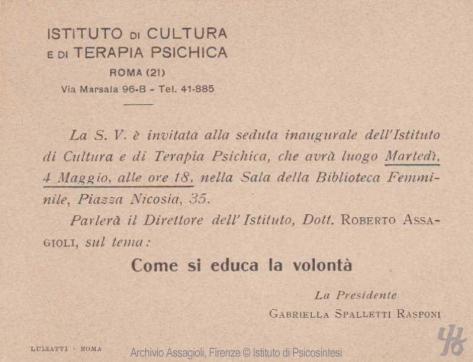
Invitation to the Istituto di Cultura e di Terapia Psichica inaugural address by Assagioli signed by the President Gabriela Spalletti Rasponi.

At her private villa in Rome (now a 5-star hotel), Rasponi often hosted and promoted many new thinkers. Every Thursday afternoon, influential political and cultural figures frequented the villa’s drawing rooms – from Émile Coué (1857-1926), the French psychologist, to Rabindranath Tagore (1861-1941), the 1913 Nobel Prize winner in Literature and Hermann von Keyserling (1880-1946), whom Assagioli described as “a brilliant thinker, a fine architect of the word, and a fervid man of action.”

In 1937, Jiddu Krishnamurti visited Rome for three months and held his conferences at Rasponi’s villa. Despite the fact that Krishnamurti was under surveillance by the the fascist regime’s political police, he was allowed to give his philosophical talks in part because of Rasponi’s high standing and her assurance that his discourses were “absolutely and only philosophical.”

As a Devoted Grandmother

With regard to Rasponi’s devotion as a grandmother, Assagioli wrote:

“The Contessa’s house resembled a government ministry, but that did not prevent her, while in her 70s and in ill health, from being such a conscientious grandmother that she resumed the study of Latin and Greek in order to help her young grandson further develop himself.”

Her Revolutionary Initiatives

Rasponi throughout her lifetime founded, organized and implemented revolutionary initiatives – including the vision of psychosynthesis. She established travelling libraries for teachers, secretariats for the protection of women and orphaned children, and maternity help for needy mothers. She always promoted women’s education as an integration of practical activity and intellectual stimulation.

References

Assagioli, Roberto, (1973). “The Conflict between Generations and Psychosynthesis of the Ages”, Psychosynthesis Research Foundation, Issue No. 31.

Assagioli, Roberto. (2008). Il mondo interiore, W. Esposito (Ed.). Vicenza, Italy: Edizioni Teosofiche Italiane, pp. 183-191.

Assagioli, Roberto (1971). Psicosintesi: Armonia della vita. Roma: Edizioni Mediterranee, pp. 69-70.

Bartoloni, Stefania, (2016). “Rasponi Spelletti, Gabriela,” in the Dizionario Biografico degli Italiani – Volume 86 (2016) Retrieved 3 March 2018 from http://www.treccani.it/enciclopedia/gabriella-rasponi-spalletti_(Dizionario-Biografico)

Giovetti, P. (1995). Roberto Assagioli: La vita e l’opera del fondatore della Psicosintesi. Rome: Edizioni Mediterrane, pp. 45-46.

La Contessa che amava ‘tramare’” blog post on Opportunità di Genere Women’s Studies. Posted on 11 April 2014 and retrieved 3 March 2018 from http://opportunitadigenere.blogspot.it/2014/04/la-contessa-che-amava-tramare.html

Merletto a Filet di Lucciano.” Retrieved 3 March 2018 from http://www.fioretombolo.net/luccianofilet.htm

Quarrata: Le produzioni tipiche” Retrieved 3 March 2018 from http://www.comunequarrata.it/flex/cm/pages/ServeBLOB.php/L/IT/IDPagina/2338

“Villa Spelletti Trivelli, The History”. Retrieved 3 March 2018 from https://villaspalletti.it/en/our-hotel.html
A Spiritual Warrior for Human Rights

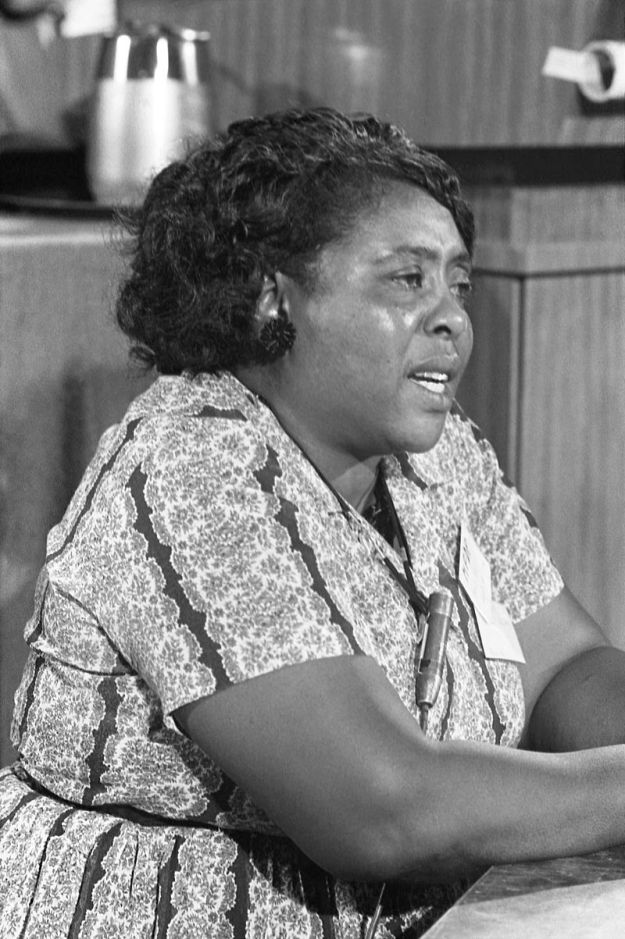
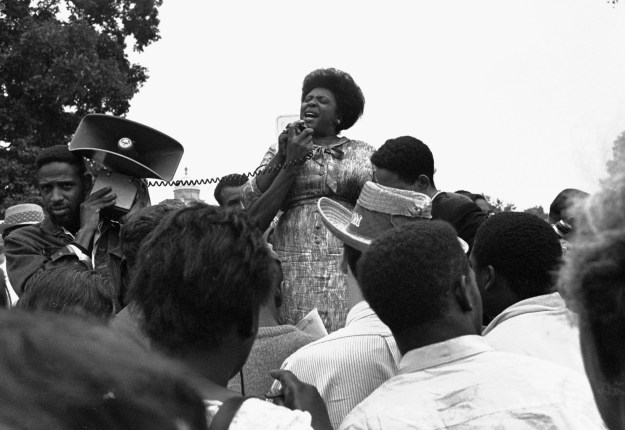
FILE – In this Sept. 17, 1965 file photo, Fannie Lou Hamer, of Ruleville, Miss., speaks to Mississippi Freedom Democratic Party sympathizers outside the Capitol in Washington after the House of Representatives rejected a challenger to the 1964 election of five Mississippi representatives. (AP Photo/William J. Smith, File)

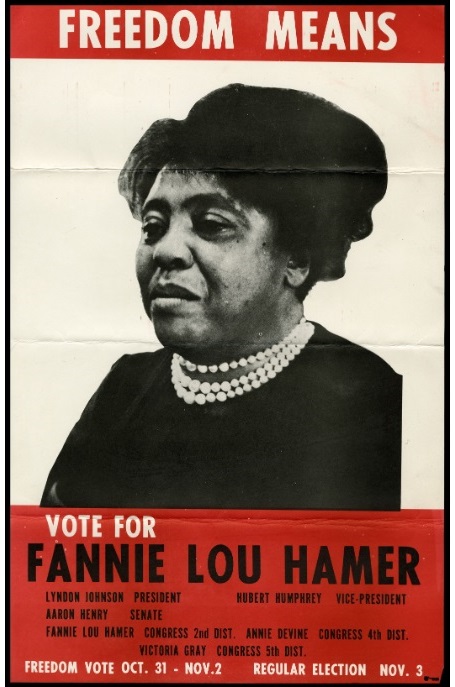
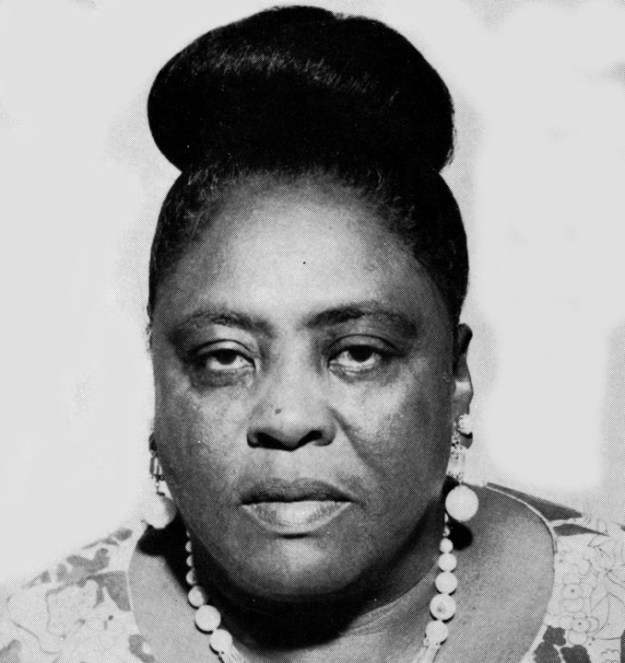
February is black history month in the U.S., and I recently learned about Fannie Lou Hamer, an inspiring and heroic woman who fought for civil rights, women’s rights, class rights, and overall human rights. What caught my attention was that her courageous fight against oppression was motivated by a spiritual awakening that she had at the age of 44.

During her lifetime, Hamer was extorted, threatened, harassed, shot at, and assaulted by racists, including members of the police, while trying to register for and exercise her right to vote. She later helped and encouraged thousands of African-Americans in Mississippi to become registered voters and helped hundreds of poverty-strickened people through her work in programs like the Freedom Farm Cooperative.

Hamer (1917-1977) was the last of 20 children born to a sharecroppers in Mississippi. Tricked into picking cotton when she was only six, the owner of the plantation promised her snacks and sweets that her family could not afford from his store. She only attended school until the 6th grade, having to return to the fields to help support her aging parents. By age 13, she would pick 200–300 pounds (90 to 140 kg) of cotton daily while living with polio.

In 1944, she married Perry Hamer and the couple toiled on a Mississippi plantation. Because Hamer was the only worker who could read and write, she also served as plantation timekeeper. The Hamers wanted to have children, but in 1961, Fanny Lou received a hysterectomy by a white doctor without her consent while undergoing surgery to remove a uterine tumor. The Hamers later adopted two daughters.

In the summer of 1964, Hamer attended a meeting led by civil rights activists in the Student Non-Violent Coordinating Committee (SNCC) and Southern Christian Leadership Conference (SCLC). It was the first time she learned that black people had the right to vote. Hamer’s biographer, Dr. Keisha N. Blain says that, at that moment, Hamer found her calling. Blain explains:

“It was certainly a political awakening for Hamer, but it also was a spiritual awakening.

“She felt that it was God’s plan for her to become an activist and take a leading role in the expansion of black political rights.

“The one reason that she never gave up despite all she had to struggle through was that she really believed that ‘God was on her side.’ She truly believed that it was not so much a political mission, but a spiritual one. She saw herself ‘speaking light into a world of darkness’.”

Once the owner of the farm where she worked learned that she had tried to register to vote (which was initially denied because of a trumped up ‘literacy test’), she was immediately fired. Despite having to move house, loose most of her possessions, and ultimately flee for her life, Hamer was free to pursue her calling. Reflecting later, she said “They kicked me off the plantation, they set me free. It’s the best thing that could happen. Now I can work for my people.”

Hamer is perhaps most famous for her speech at the 1964 Democratic Convention during which she described her brutal beating in a Mississippi jail during her struggle to register to vote. President Lyndon Johnson was so frightened by the power of her message that he called an impromptu televised press conference so she would not get any television airtime. But her speech was later aired and inevitably moved even Johnson and many others to help pass the 1964 Voting Rights Act.

Hamer speaking at the 1964 Democratic National Convention in Atlantic City, N.J.

During Hamer’s time as an activist, she traveled extensively, giving powerful speeches on behalf of civil rights. Woven into her speeches was a deep level of confidence, biblical knowledge, and even comedy. One of her famous lines, that appears on her tombstone, is “I’m sick and tired of being sick and tired.” She often inspired other activists with her singing of spiritual Gospel songs during times of great stress and even terror.

In 1964, Hamer was one of the 11 SNCC delegates (including John Lewis and Harry Belefonte) who visited Ghana. The visit was revolutionary for her, for she saw for the first time black people in charge of their own destiny, including holding positions of political power. (Hamer would run for both for the U.S. Senate in 1964 and the Mississippi State Senate in 1971.) After a three-hour interview with the Diallo Alpha, Director General of the Ministry for Information and Tourism, Hamer received a musical instrument only found in Africa.

In the end, Hamer grew frustrated with politics. She said she was “tired of all this beating” and “there’s so much hate. Only God has kept the Negro sane”. A great cook and knowledgeable about growing crops and raising animals, in 1968, she returned to her hometown of Ruleville, Mississippi, and began a “pig bank” to provide free pigs for black farmers to breed, raise, and slaughter. A year later she launched the Freedom Farm Cooperative, buying up land that blacks could own and farm collectively. With the assistance of donors, she purchased 640 acres and launched a coop store, boutique, and sewing enterprise. She single-handedly ensured that 200 units of low-income housing were built—many still exist in Ruleville today.

Hamer may be remembered best as a civil rights activist, but she was foremost a spiritual warrior. Her faith and calling is what sustained her. Hamer was convinced that God was working through the civil rights movement to usher in the Kingdom of God.  Her favorite Bible passage was from the Gospel of Luke 4:18:

The Spirit of the Lord is upon me, he as sent me to heal the brokenhearted, to preach deliverance to the captive, and recover the sight to the blind, to set at liberty to them who are bruised, to preach the acceptable year of the Lord.

In the end, Hamer died of breast cancer after suffering for many years with various physical illinesses, some sustained from her beatings. May God rest her soul.

May God grant us all the her spiritual strength to preserver in whatever area of activism we are called upon to passionately undertake.

Discover More about Fanny Lou Hamer

Read the speech Hamer gave with Malcolm X in Harlem, New York.

Read the full report of the SNCC visit to Ghana.

Read an article about Hamer’s pastoral and prophetic styles of leadership as acts of public prayer by Breanne K. Barber.

Buy Until I Am Free: Fannie Lou Hamer’s Enduring Message to America by Dr. Keisha N. Blain 

Search for more information on Fanny Lou Hammer in the digital collection at the University of Southern Mississippi

Giving “Birth to a Butterfly”: Assagioli’s Feminist Patient

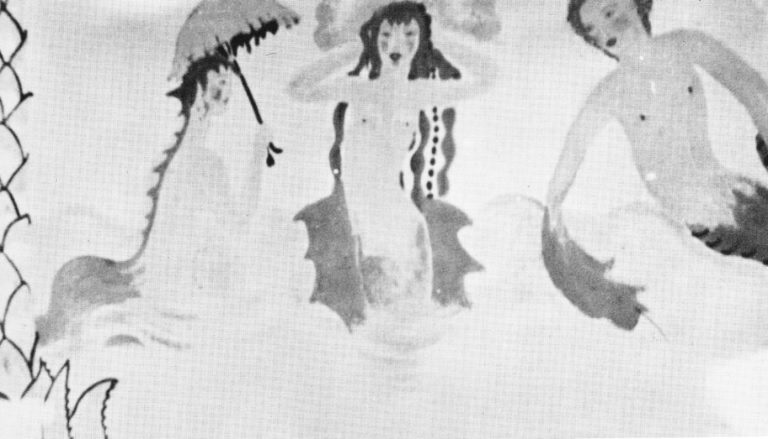
Wall painting by Mina Loy, Peggy Guggenheim’s Villa, Pramousquier, 1923

In 1913, Mina Loy (1882-1966) was living in a rented villa in Florence when she found herself in a torpor and depressed. Her photographer husband had just set sail for Australia, abandoning her with their two children. A painter herself, she was artistically stalled and still mourning over the death of her first child who had died in infancy six years earlier.

Enter Dr. Roberto Assagioli!

Yes, Mina Loy – feminist, bohemian, poet, and playwright – was one of Roberto Assagioli’s first clients.

Over the course of her lifetime, Loy acted, wrote feminist and utopian tracts, created lampshades, and painted – including a lost portrait of Assagioli. Loy was born in London. Her mother was British and Christian while her father was a Hungarian Jewish tailor who had escaped Budapest’s antisemitism. Loy would end up having two husbands, four children, and several complicated love affairs. (More on two of these later…)

Continue reading