 According to Roberto Assagioli, the first stage of any decision is to ascertain the purpose driving us toward our desired goal. During all the subsequent stages of an act of will — deliberation, affirmation, choice, planning and execution – we can often gain energy by returning to reflect on our initial purpose.
However, there may be times when we find ourselves in a difficult situation and unable to understand exactly what we are doing or why. We may feel stuck in a particularly uncomfortable situation. Or we may have to interact with challenging (sub)personalities, who only trigger our own unresolved issues! Nothing around us seems to feel right anymore. Nothing seems to fit with our ideals or desired aims.
We might be asking ourselves: Whatever are we doing here? Whatever could our purpose be?
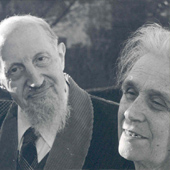
Roberto Assagioli and Ida Palombi
Eighty years ago, Ida Palombi (1905-1981) posed this exact question to Roberto Assagioli. Having graduated from the University of Rome, in 1939 she found herself working as a social worker and translator for the Ministry of the Interior of Rome under the fascist regime. At the same time, she was regularly attending lessons Assagioli was offering at his home on the Aventine. Continue reading
 The day started out normal enough. Breakfast of homemade bread and jams, creamy sheep cheese from Sardinia, ricotta, and peanut butter from a large jar brought long ago from the Netherlands, all swallowed down with cappuccinos in our usual breakfast cups. That morning we were just a bit more rushed, hurrying out by 8 am to attend the morning mass at the Monastery of St. Luca in Fabriano.
 This weekend, many Italians are traveling to village cemeteries to pay homage to their ancestors. The Catholic feast of All Saints Day on November 1st is a national holiday followed by All Soul’s Day. It is a time for the living to ritually remember the dead – both saint and sinner alike. In preparation, the (mostly older) women are scrubbing tombstones clean and buying votive candles and pots of chrysanthemums to decorate the graves of loved ones. Coinciding with the beginning of darker days and longer nights, this time allows us to pause and consider our own life and death.
 Love and Will