While many of us are feeling overwhelmed by the conflicts in Ukraine and Gaza of late, there are actually 127 armed conflicts taking place in the world today. Most of these conflicts do not make the headlines. Some of them started recently, while others have lasted for more than 50 years.
So I thought it might be a good time to share this story about a spiritual experience that Roberto Assagioli had during wartime. He called it a shechinah and declared that it was one of the ‘high water marks’ of his spiritual life. You can read about his experience below in both English and Italian. My hope is that his story reminds us that the Higher Self exists in all of us, everywhere, at all times.
Note from Assagioli’s Archives:
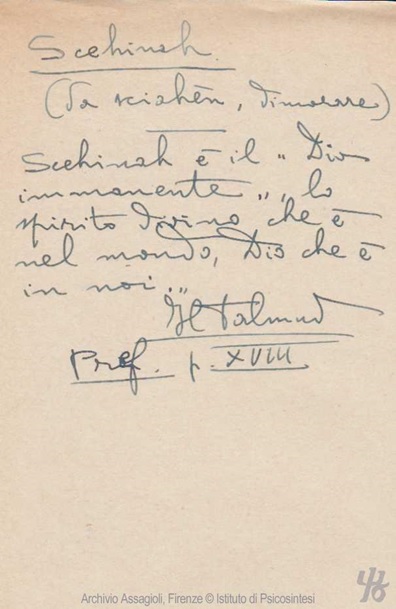
Scehinah (da sciahèn, dimorare) / Scehinah è il “Dio immanente”, lo spirito divino che è nel mondo, “Dio che è in noi”. / Il Talmud, Pref. p. XVIII (Doc #17591, Istituto di Psicosintesi, Florence).
Scehinah (from sciahèn, dwell) / Scehinah is the “immanent God,” the divine spirit that is in the world, “God who is in us.” / The Talmud, Pref. p. XVIII
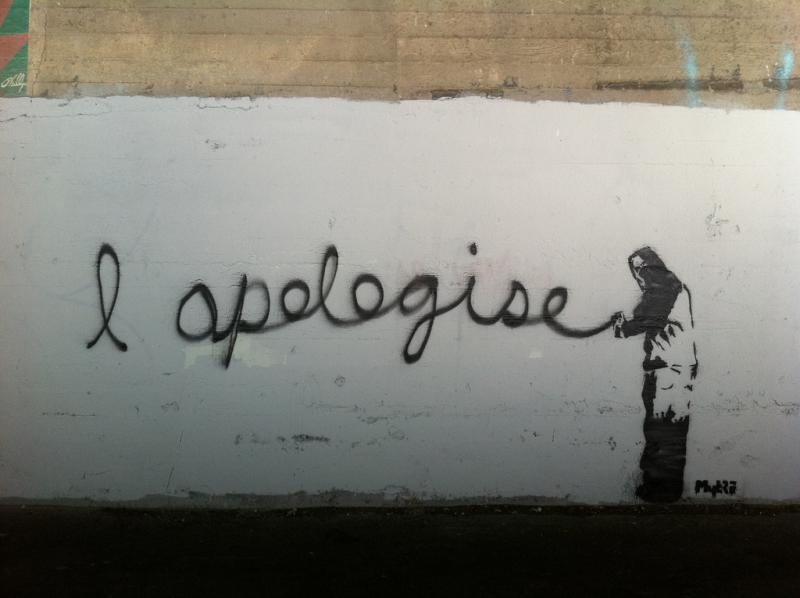
January is already half gone. Most of us are in full swing again, our busy lives moving rapidly towards spring. Any resolutions are probably either forgotten or put on the back burner. But the start of a new year is also a good time to reflect and forgive — yourself or someone else — and to extend an apology to someone else for forgiveness.
I have written about the process of forgiveness and how much time it can take. But I learned another approach to forgiveness through an interview of the playwright and author Eve Ensler about her book The Apology. Throughout her childhood, Ensler had been physically and sexually abused by her father. Decades after his death, she decided to write an apology for him – the apology that she had yearned to hear all her life. The book is written entirely from his perspective. In its “Introduction”, she talks about using her imagination to create the words she needed to hear her father say:
“My father is long dead. He will never say the words to me. He will not make the apology. So it must be imagined. For it is in our imagination that we can dream across boundaries, deepen the narrative, and design alternative outcomes.”
As Ensler points out, the first step towards forgiving or making an apology or even hearing an apology can begin with our own imagination. Assagioli said that our imagination has the great power to produce something that never existed before. By using our creative imagination, we help to externally manifest that which we visualize. In other words, by just imagining ourselves forgiving someone or apologizing to someone or having our perpetrator apology to us, we begin to engage in that very act.
Will and Imagination / Imagination is needed in “seeing” the goals and aims. (Note from Assagioli’s Archives)
Now, like most psychosynthesis techniques, using our creative imagination is not so easy! We can’t just say ‘I’m sorry’ and Poof! Magically all is forgiven and forgotten. The imagination must be fully engaged in creative play. We must physically feel the apologize. We would do well to write it down with pen and paper, say it out loud, imagine the injured or injurer sitting before us. We then need to chew on all of our feelings, thoughts and bodily sensations. Allow the apology to sink in our stomach. Perhaps cry and even scream our response. Breathe and imagine again…
I have many examples from my counseling practice of how the imagination can work in this way. Here is just one. During our second session together, Clair talked about her longing to reconcile her relationship with her father, which had ruptured fifteen years earlier. When Clair was 11 years old, her father decided to stop talking to the family, made this announcement to her mother and marked it by shaving his head. He only engaged with the family in angry outbreaks, otherwise he was completely silent. Towards the end of Clair’s detailed description of what had happened, she was sobbing. Five days after Clair shared her longing for reconciliation, she received a letter from her father – completely unprompted by her – requesting that they arrange to talk about what happened when she was 11 years old.
Will / Dynamic imagination – / It evokes, directs, focuses the drives and determines the execution, the action – (Note from Assagioli’s Archives)
Both acts, whether we forgive someone or apologize to another, brings freedom. Freedom from the visceral memory of the wounds received in body, soul and psyche. Freedom from the inner emptiness left by the harm we may have inflicted on another. By holding tight to this goal of freedom, a higher transpersonal quality, we can endure the wretchedness we might be feeling as we relive painful experiences. Ultimately, as we move towards reconciliation, inner freedom is awakened and nurtured, activating an inner opening within our heart in which peace can move in and take residence.
To help with this process, one reader recently sent me Forgiveness Phrases by Larry Yang – Awakening Together. In this four-part meditation, you are first invited to ask yourself for forgiveness. Then you imagine yourself asking forgiveness for some act you have consciously or unconsciously inflicted on another. Thirdly, you ask that you may forgive someone else. Finally, you ask for the freedom forgiveness can bring.
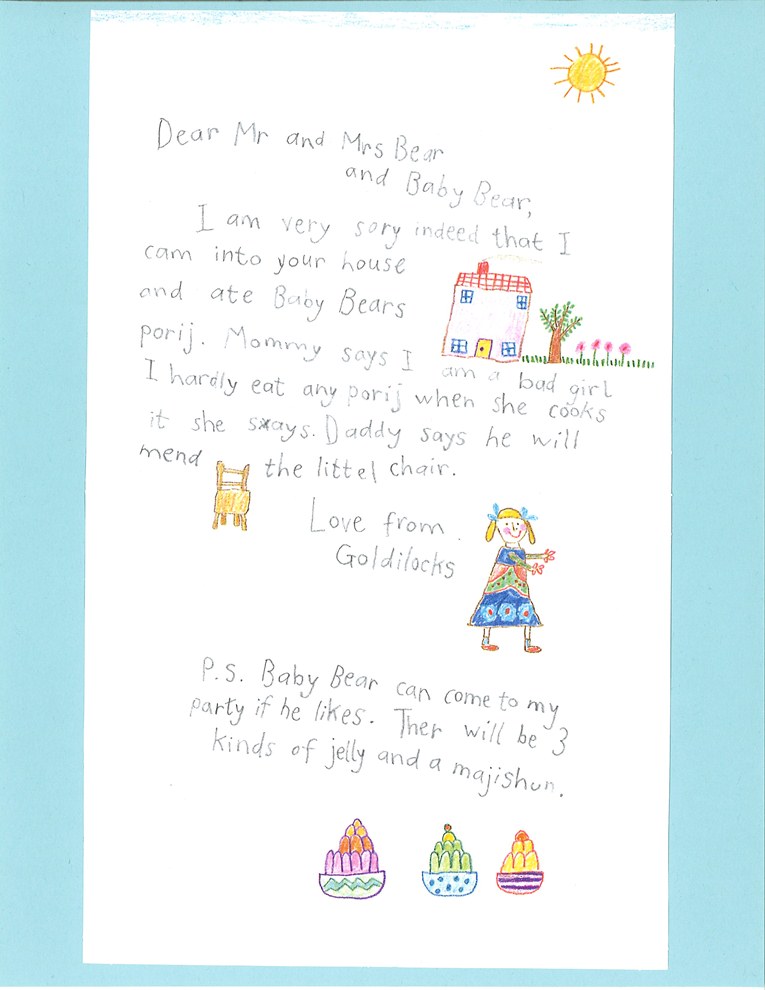
To move more deeply towards birthing forgiveness or an apology requires self-evaluation and reflection. Both forgiving and apologizing are a remembering. Both are humbling. Both victim and perpetrator become equal, fallible, human beings. Both abdicate power. Both become vulnerable.
An apology means examining the details of what you have done. Forgiveness means reliving the details of what has been done to you. Because God is in the details. Freedom is in the details.
This freedom – for both the forgiver and forgiven – is a spiritual release. Ultimately, you will feel a wave of energy move through your body. Your knees might shake and your chest rattle with sobs. In the end, you will breathe again and see the world differently. You will be more connected to all around you.
I leave the final words to Ensler:
“Find a clergy, a person, a counselor. Start to work on your apology. It’s a process. It’s a journey. It’s a practice. It takes time. And to those who can’t get an apology, write yourself one from your perpetrator. Work with somebody to support it. Write a thorough letter to yourself from the person who harmed you. The impact on me was profound. I feel free in a way I have never felt in my life.”
Many thanks to Clair (not her real name) for letting me share her story.
FILE – In this Sept. 17, 1965 file photo, Fannie Lou Hamer, of Ruleville, Miss., speaks to Mississippi Freedom Democratic Party sympathizers outside the Capitol in Washington after the House of Representatives rejected a challenger to the 1964 election of five Mississippi representatives. (AP Photo/William J. Smith, File)
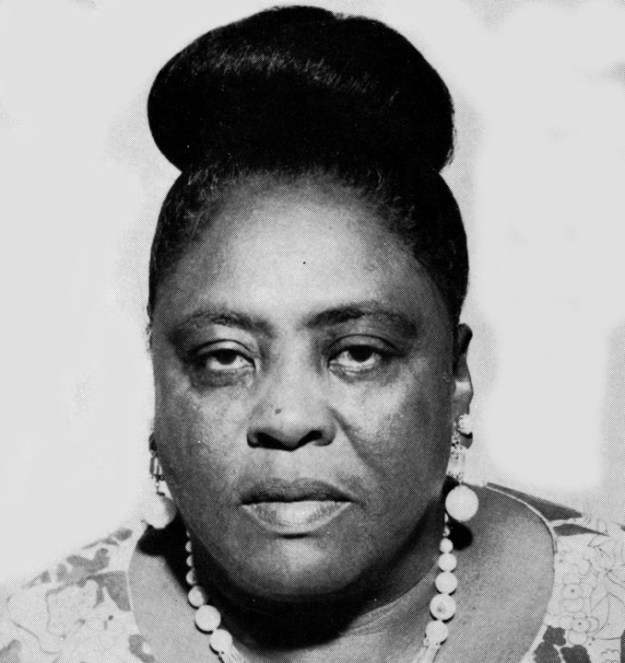
February is black history month in the U.S., and I recently learned about Fannie Lou Hamer, an inspiring and heroic woman who fought for civil rights, women’s rights, class rights, and overall human rights. What caught my attention was that her courageous fight against oppression was motivated by a spiritual awakening that she had at the age of 44.
During her lifetime, Hamer was extorted, threatened, harassed, shot at, and assaulted by racists, including members of the police, while trying to register for and exercise her right to vote. She later helped and encouraged thousands of African-Americans in Mississippi to become registered voters and helped hundreds of poverty-strickened people through her work in programs like the Freedom Farm Cooperative.
Hamer (1917-1977) was the last of 20 children born to a sharecroppers in Mississippi. Tricked into picking cotton when she was only six, the owner of the plantation promised her snacks and sweets that her family could not afford from his store. She only attended school until the 6th grade, having to return to the fields to help support her aging parents. By age 13, she would pick 200–300 pounds (90 to 140 kg) of cotton daily while living with polio.
In 1944, she married Perry Hamer and the couple toiled on a Mississippi plantation. Because Hamer was the only worker who could read and write, she also served as plantation timekeeper. The Hamers wanted to have children, but in 1961, Fanny Lou received a hysterectomy by a white doctor without her consent while undergoing surgery to remove a uterine tumor. The Hamers later adopted two daughters.
In the summer of 1964, Hamer attended a meeting led by civil rights activists in the Student Non-Violent Coordinating Committee (SNCC) and Southern Christian Leadership Conference (SCLC). It was the first time she learned that black people had the right to vote. Hamer’s biographer, Dr. Keisha N. Blain says that, at that moment, Hamer found her calling. Blain explains:
“It was certainly a political awakening for Hamer, but it also was a spiritual awakening.
“She felt that it was God’s plan for her to become an activist and take a leading role in the expansion of black political rights.
“The one reason that she never gave up despite all she had to struggle through was that she really believed that ‘God was on her side.’ She truly believed that it was not so much a political mission, but a spiritual one. She saw herself ‘speaking light into a world of darkness’.”
Once the owner of the farm where she worked learned that she had tried to register to vote (which was initially denied because of a trumped up ‘literacy test’), she was immediately fired. Despite having to move house, loose most of her possessions, and ultimately flee for her life, Hamer was free to pursue her calling. Reflecting later, she said “They kicked me off the plantation, they set me free. It’s the best thing that could happen. Now I can work for my people.”
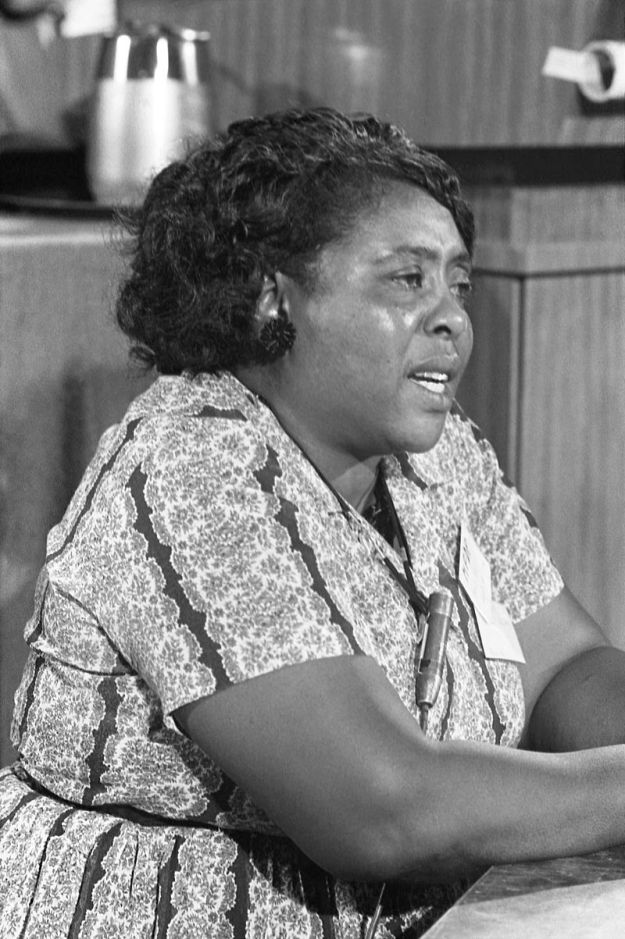
Hamer is perhaps most famous for her speech at the 1964 Democratic Convention during which she described her brutal beating in a Mississippi jail during her struggle to register to vote. President Lyndon Johnson was so frightened by the power of her message that he called an impromptu televised press conference so she would not get any television airtime. But her speech was later aired and inevitably moved even Johnson and many others to help pass the 1964 Voting Rights Act.
Hamer speaking at the 1964 Democratic National Convention in Atlantic City, N.J.
During Hamer’s time as an activist, she traveled extensively, giving powerful speeches on behalf of civil rights. Woven into her speeches was a deep level of confidence, biblical knowledge, and even comedy. One of her famous lines, that appears on her tombstone, is “I’m sick and tired of being sick and tired.” She often inspired other activists with her singing of spiritual Gospel songs during times of great stress and even terror.
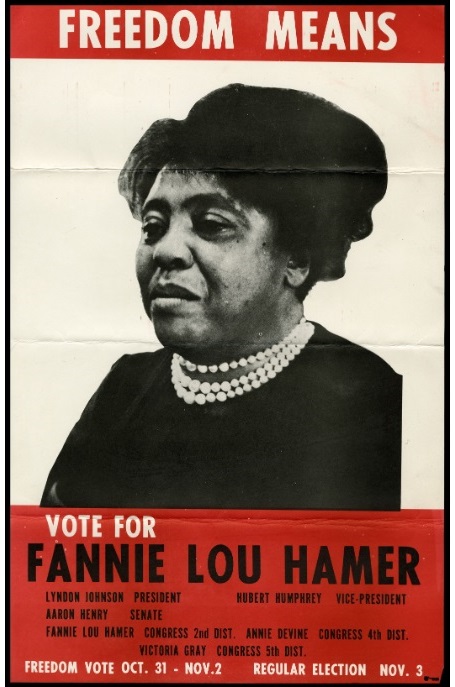
In 1964, Hamer was one of the 11 SNCC delegates (including John Lewis and Harry Belefonte) who visited Ghana. The visit was revolutionary for her, for she saw for the first time black people in charge of their own destiny, including holding positions of political power. (Hamer would run for both for the U.S. Senate in 1964 and the Mississippi State Senate in 1971.) After a three-hour interview with the Diallo Alpha, Director General of the Ministry for Information and Tourism, Hamer received a musical instrument only found in Africa.
In the end, Hamer grew frustrated with politics. She said she was “tired of all this beating” and “there’s so much hate. Only God has kept the Negro sane”. A great cook and knowledgeable about growing crops and raising animals, in 1968, she returned to her hometown of Ruleville, Mississippi, and began a “pig bank” to provide free pigs for black farmers to breed, raise, and slaughter. A year later she launched the Freedom Farm Cooperative, buying up land that blacks could own and farm collectively. With the assistance of donors, she purchased 640 acres and launched a coop store, boutique, and sewing enterprise. She single-handedly ensured that 200 units of low-income housing were built—many still exist in Ruleville today.
Hamer may be remembered best as a civil rights activist, but she was foremost a spiritual warrior. Her faith and calling is what sustained her. Hamer was convinced that God was working through the civil rights movement to usher in the Kingdom of God. Her favorite Bible passage was from the Gospel of Luke 4:18:
The Spirit of the Lord is upon me, he as sent me to heal the brokenhearted, to preach deliverance to the captive, and recover the sight to the blind, to set at liberty to them who are bruised, to preach the acceptable year of the Lord.
In the end, Hamer died of breast cancer after suffering for many years with various physical illinesses, some sustained from her beatings. May God rest her soul.
May God grant us all the her spiritual strength to preserver in whatever area of activism we are called upon to passionately undertake.

 January is already half gone. Most of us are in full swing again, our busy lives moving rapidly towards spring. Any resolutions are probably either forgotten or put on the back burner. But the start of a new year is also a good time to reflect and forgive — yourself or someone else — and to extend an apology to someone else for forgiveness.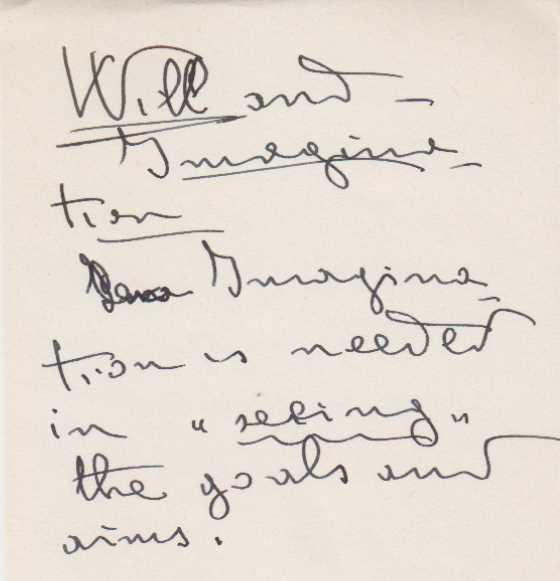

 To move more deeply towards birthing forgiveness or an apology requires self-evaluation and reflection. Both forgiving and apologizing are a remembering. Both are humbling. Both victim and perpetrator become equal, fallible, human beings. Both abdicate power. Both become vulnerable.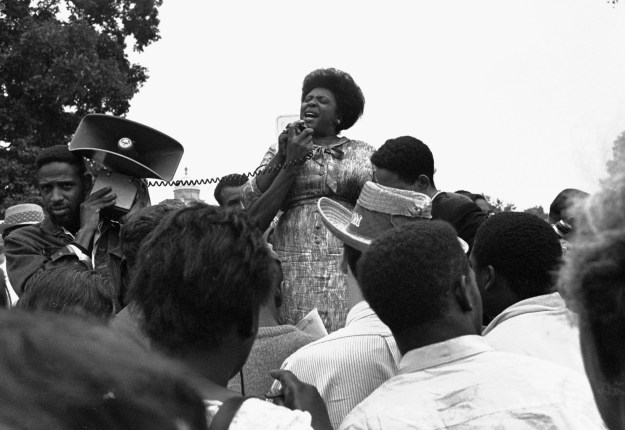
 Love and Will