Tag Archives: Assagioli

Heavenly and Earthly Desires

xmas-postcard-front-010305

The Journey of the Three Magi. Postcard from Assagioli’s Archives (ID# 010305)

Desire, in all its dimensions, is beautifully woven into the Christmas story. This word desire can evoke so many different images and feelings. Assagioli saw desire as an integral part of ourselves and subject to both our personal will and the will of the Higher Self.

In fact, the word desire fundamentally holds this idea of a higher or transpersonal will.  I was amazed to learn that the word comes from the Latin roots dē, which means to “come from” and sīdus which means “heavenly body.” In other words, our longings literally “come from the heavens.” This idea may have originated from astrology, which attempts to understand how the heavenly bodies – stars and planets alike – can define who we are and what we want to become. Continue reading

Imagine All the Healing

Finally I was able to let go of fear and found courage and trust. Marije Smits

“Finally I was able to let go of fear and found courage and trust.” (Marije Smits)

When Susan arrived for her first counseling session, I was struck by her almost fairy-like beauty. With dark hair, creamy fair skin, and crystal green eyes, she reminded me of Snow White. At the time of our meeting, Susan was a 28-year-old PhD student studying philosophy and ethics. Not long before, she had discovered a mole while taking a shower. Susan had been going to tanning salons since she was 20. By the time she was 23, she was addicted to looking and feeling “sun-kissed”. By then she was working at the tanning salon to help pay for her own treatments. For nearly two years, she was tanning every other day.

The mole turned out to be diagnosed as malignant melanoma, the deadliest form of skin cancer. “I didn’t even know what ‘melanoma’ meant,” she admitted to me. “When I found out the results, I was all alone at home and started to panic. I thought I was going to die.”

Continue reading

An Imagined Apology

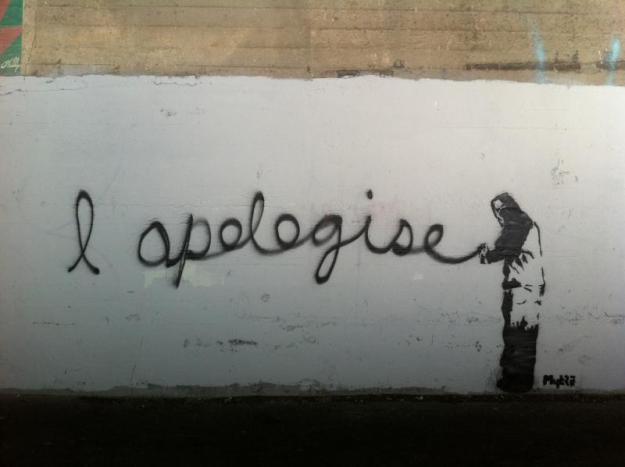
Apology - Street ArtNot long ago, I reflected on the process of forgiveness and how much time it can take. Recently, I heard a fascinating interview of the playwright and author Eve Ensler about her new book The Apology. Throughout her childhood, Ensler had been physically and sexually abused by her father. Decades after his death, she decided to write an apology for him – the apology that she had yearned to hear all her life. The book is written entirely from his perspective. In its “Introduction”, she talks about using her imagination to create the words she needed to hear her father say:

“My father is long dead. He will never say the words to me. He will not make the apology. So it must be imagined. For it is in our imagination that we can dream across boundaries, deepen the narrative, and design alternative outcomes.”

Continue reading