Creating harmony in your inner life requires patience, prayer, and lifelong practice.
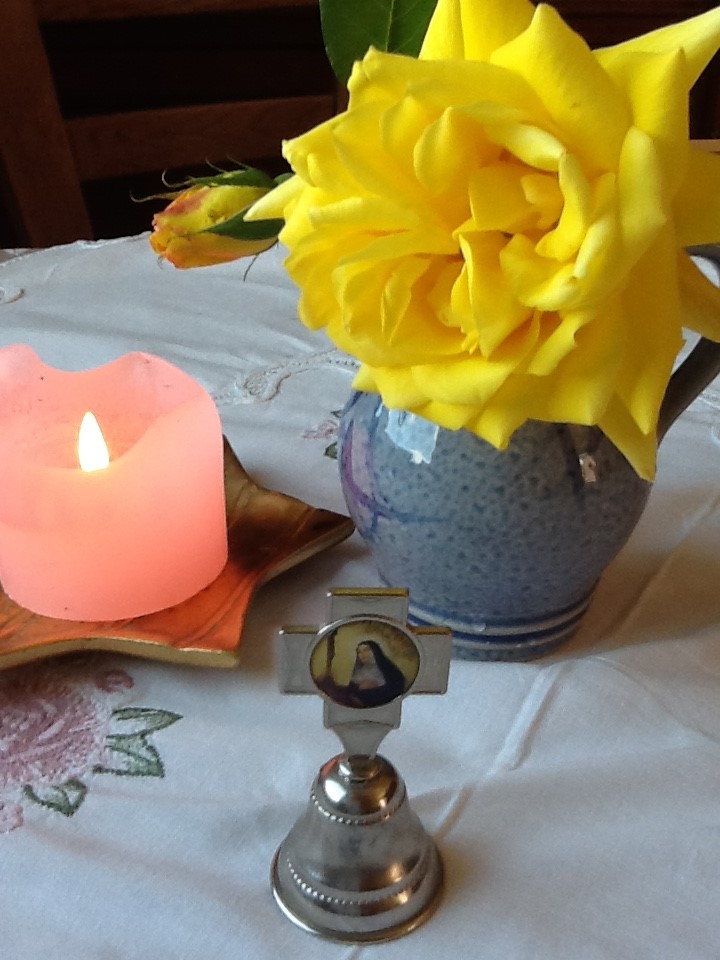
Today is Saint Rita’s feast day, and this afternoon I will be joining the local women in our Umbrian village in the small Marian chapel. Saint Rita is especially popular here since she was born and lived in the nearby town of Cascia, where you can still visit her incorrupt body at the Basilica of Saint Rita. All of the women this afternoon will be carrying a bouquet of roses – one of the saint’s iconic symbols – for the priest to bless with holy water.
Two years ago this article was published by Unity Magazine about my struggle to balance two conflicting subpersonalities – Annoyed Wife and Blessed Wife. Saint Rita came to my rescue and since then, I’m happy to say, these two subpersonalities have come into (more or less!) balance.
For those of you who have already purchased Roberto Assagioli’s Creating Harmony in Life, below you will find a detailed General Index and Name Index to the book, which were omitted from the final publication. In addition, I have included Assagioli’s “Preface,” my “Introduction” and the Table of Contents.
For those of you who haven’t yet purchased the book, just take a look at the Indices to see how much you are missing! If that doesn’t convince you, then here are 5 reasons to read Creating Harmony in Life.
1. You’ll hear Assagioli’s voice. Since Creating Harmony in Life is a collection of Assagioli’s lectures, it is very different from his other published works. Accessible and very readable, this book beautifully captures Assagioli’s tone, humor, and perspectives in a genuine and intimate way.
2. You will discover hidden gems. The book is full of reflections to ponder and scholars to meet. From Arthur Eddington’s observations of the solar chromosphere to the Buddhist story of Krishnagautami, to reasons why you should pay your taxes, every page of Creating Harmony in Life holds the promise of a special surprise.
3. It’s a book for everyone. For anyone practicing psychosynthesis, Creating Harmony in Life is a great gift for anyone who has ever asked you, “Psychosyn…What? Assa…Who?” The Italian version of the book is actually used throughout Italy by people new to psychosynthesis. Besides having Assagioli’s superb summary about aspects of psychosynthesis in Appendix I, the entire book is an excellent introduction to psychosynthesis. Nevertheless, anyone already familiar with psychosynthesis will appreciate having Assagioli reaffirm their understanding.
4. It includes a brief biography of Assagioli. Appendix II (written by myself) is a brief biography of Assagioli’s life from the perspective of synthesis. I must admit that when my editors’ read it, they exclaimed, “It’s like reading a novel!”
5. You will be supporting the Istituto di Psicosintesi and Gruppo alle Fonti. This book is published by the Psychosynthesis Institute in Florence and realized by Gruppo alle Fonti, the volunteers who have lovingly curated Assagioli’s Archives over the years. When you buy the book, you are sending your financial support to Casa Assagioli, Assagioli’s Archives, and all its volunteers.
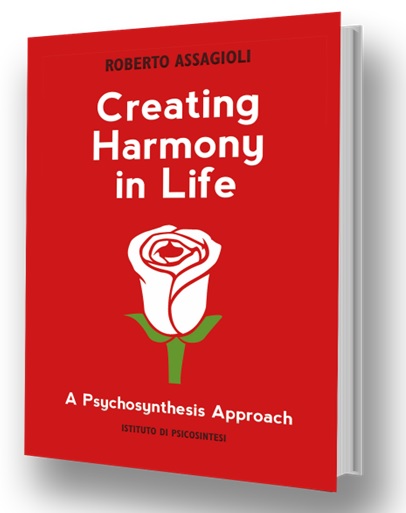
Creating Harmony in Life: A Psychosynthesis Approach by Roberto Assagioli
Published by the Istituto di Psicosintesi, Florence Available from Amazon ISBN 979-12-21402-74-2
This is Holy Week for many Christians who are anticipating the celebration of Easter next Sunday. Below is an article of mine that was published ten years ago in the AAP Psychosynthesis Quarterly. I describe a meeting with one of my clients that happened on Good Friday, which also that year coincided with Passover.
During this meeting, so many things started to converge and cross over that I was nearly overtaken by them. This story revolves around the converging life paths of my client and myself, and how we both ended up traveling long distances to witness and help guide our grandmothers towards their imminent death.
“It’s been a week of Passion,” Paula’s voice quivered as she dropped down into the chair in front of me. She had already emailed to say that her grandmother was dying and she couldn’t decide whether to go home. Paula had a long history of not being able to decide. We had been meeting for nearly 2-1/2 years, I as her psychosynthesis guide and she as my client. Together, we had explored her feelings of never being good enough and her consequent control of and search for illusive perfection in everything from shoes to menu items to true love. We had attempted to unravel and unbind her never-ending endings. And we had spent hours peeling away Paula’s habitual lateness to discover the face of cold fear of having to wait for the other and relive a surge of emotions around abandonment.
Her week of Passion was literal and figurative. It had been Holy Week and the day we met in 2011 was not only Good Friday, but also Jewish Passover. The word Pasque for Easter actually comes from the Hebrew word which means to “go through.” This week of ‘crossing over’, of leaving slavery for freedom, of moving from this world to the next, from death to everlasting life, seemed to reflect Paula’s own inner and outer struggle.
Since our last meeting, Paula had been confronted with death, an encounter that cannot be controlled or perfected or tricked into arriving before you or never at all. Her grandmother was dying of cancer and was finally surrendering to its call. Paula’s Nonna, an Italian as well as a private icon, no longer held the energy to sustain the Milanese family as she had for all of Paula’s 30 years.
Nonna had been the family pillar, the Corinthian column of strength and integrity around whom Christmas and birthdays and Holy Communions had been celebrated. This grandmother had finally decided to crumble, leaving everyone else to deal with their feelings of loss and painful loneliness. Grandmother, lucid and detached, was quietly slipping away. Her husband was angry that she had given up and stopped fighting, her family felt in many ways that she was already dead.
Three days earlier, Paula’s mother had called to prepare her daughter for the worst. While insisting that Paula not travel home from the Netherlands to Italy, her mother had wanted Paula to prepare for the imminent funeral. “Don’t come,” said Paula’s mother crying into the phone. “It’s better you remember her as she was. Your brother and sister go in to hug her and she does nothing. Nonna doesn’t care anymore. She doesn’t care if you are there are not. You are lucky not to see her this way. Besides, you will only have to fly back for the funeral. Get ready for that instead. It’s better this way.”
Paula recounted all this in tears. Throughout her childhood, her mother’s mother had been the one to comfort Paula, the one to take care of her while Paula’s mother fretted over Paula’s sickly younger brother, cooed over his comical antics.
Nonna had always told Paula that she was her favorite grandchild, and Paula wanted to go home and see her. But she struggled with her own mother’s wishes along with the fact that another ending was looming in front of her—her PhD thesis which was already late and had to be finished in less than three weeks. Logic and reason, Paula’s major accomplices throughout most of her lifetime, told her not to go home, and yet her heart was telling her otherwise…
You can continue reading this story below. Happy Easter!


 Love and Will