You Are a World Champion

If you’ve been spending the last month watching 22 men chasing a little ball around a green pitch, then you’re not alone. I along with millions of others have also been captivated by the World Cup Tournament. Today the German team appears in the media as World Champions, holding the funny looking gold trophy above their heads. Throughout the tournament, players and their fans have been photographed crying, laughing, beaming, broken, angry, despondent, and joyful. What is this global emotion all about?

World Cup Champions 2014

World Cup Champions 2014

After the final match, my husband and I watched a flustered journalist attempt to interview the German team captain. The reporter could barely put two words together, he was so overwhelmed with emotion. All these feelings with nowhere to go. We look to our national teams for courage, determination, skill and stamina and we bemoan their defeat. The team carries so much more for us collectively as we wave our flags, paint our faces, and wrap ourselves in the designated colors. Now that it’s all over, what will we do?

We might think about our need for outer heroes and heroines (the latter are sorely lacking in football), and how they reflect our personal heroes inside us. All our football players are holding the higher qualities that we long for in ourselves. Perhaps we too are seeking courage and persistence in our own daily struggles along with joy and elation in our own personal triumphs.

Now is the time to try and integrate the feelings that bubbled up during the tournament and make them more our own. For example, I found myself consistently sad at the end of any game, identifying with the losers, wishing everyone could be a winner. What does that say about me? I often criticize myself for not being good enough, a failure, insignificant in this whirlwind called life. But the reality is, I too am a winner in my own way, through my own small everyday battles, sometimes creeping along inch-by-inch with the persistence, faith, and stamina of the best footballer. And when I am successful, I often shy away from the limelight, almost afraid of standing firmly in the winner’s circle.

Continue reading

Relationship in the Here-and-Now

Learning how to express ourselves in relationship can be challenging. We often have something vital to say, yet we struggle to express it. Instead of communicating our message, we end up either misunderstood or having the other person become hurt or defensive. This can surprise us. How can they feel that way? We have the best intentions and only want to achieve greater intimacy and connection! This leads us to the question: How can we best express ourselves in a meaningful way and stay in relationship with another person?

Internet Addiction

Where are you in relationship to others?

The practice of right relations partly depends on how well we understand our own personal history and how it influences our behavior in relationship. We often tend to see others through our own culture, history, and feelings. This distorts the picture we have of the other, leaving us unable to acknowledge and genuinely respect them and, consequently, create a more fruitful working relationship.

What becomes key is our ability to relate sincerely to the person in any here-and-now situation. This means we need to pay attention to what is happening inside ourselves as well as to what the other communicates to us. Through awareness of ourselves and better understanding of the other, we are more likely to find the best fit for both of us.

In other words, when both parties try to understand the needs and interests of the other, then both will feel acknowledged and be able to better cooperate. We start doing this by seeing what actually is, rather than reacting to what we expect, fear or would like to see. When we cut through habitual patterns of defense, prejudices, expectations, and mindsets, we allow ourselves to open up to new levels of communication.

Being in the here-and-now means fully experiencing what is, and not what happened to you as a child or in your last marriage. It calls for an acceptance of what is NOW. We can do this by staying in touch with our breath, our body sensations, and using our will to inhibit ourselves from acting impulsively. Often we try to figure somebody or a situation out, but the real answer is not in our heads, but in our body and feelings, held long enough to allow solutions to emerge.

Continue reading

Tuning into Transpersonal Will

Besides strong, skillful and good, another aspect of the will that Assagioli writes about is the transpersonal will, which touches on the spiritual dimension of the human being. Many people can lead a rich and useful life without this aspect of will. But others, who have had a direct experience of a transcendent reality, will recognize the transpersonal will operating in their lives. Their goal will be to use the other aspects of will—strong, skillful, and good—to tune into the transpersonal will, come into relationship with it, and use it to act in the world as well.

Transpersonal Will Activates Personal Meaning

We may find ourselves longing to tune into the transpersonal will when we feel a need to understand the meaning of our life. We might feel as if our life—despite our worldly success in work, family, and on a personal level—lacks meaning or value. Or we might be facing a sudden, unexpected crisis, like a death in the family or loss of job, that calls up this need.

The Three Stone Cutters

Stone-Cutter

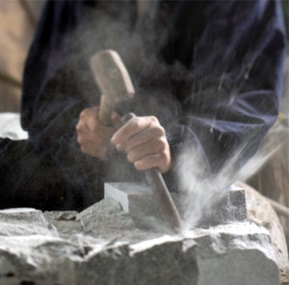
There is a medieval story about three stone cutters who were cutting granite for a new cathedral. When asked in turn, “What are you doing?” the first replied in an angry tone, “As you can see for yourself, I’m cutting stones.” The second answered, “I am earning a living for me and my family.” And the third said joyously, “I am building a great cathedral.” All were doing the exact same thing, but the first felt a sense of futility, the second a personal purpose in his work, and the third recognized a greater meaning and connection with a greater whole.

Continue reading