Tag Archives: spiritual

Sunflower Lessons

SunflowerThere are times in my life when I know I am trying too hard. No matter what I seem to do, nothing works, eases forward, sings in tune. For instance, while working in my garden, I can dig the earth, feed it the richest manure, insure it has enough calcium, carefully sow the seeds, faithfully water, fuss over the tiniest plants, pull weeds, and even pray. And still nothing grows. Sometimes I forget about God. Oh yeah, that Guy. He also might have something to say. In fact, his Will (or in psychosynthesis terms, the Higher Self and Transpersonal Will) might be bigger and beyond what I can imagine growing in anybody’s garden. In anybody’s heart and soul.

I recently learned a lesson from my sunflowers. This year they grew with only the Hand of God to tend them. Last year, we carefully planted sunflowers which grew and blossomed. Once the flowers hung heavy with seed, tipping their heads like bowing monks, we cut and left them on our terrace for the birds to swoop down and eat from. The chickadees and blue tits would shyly flutter from the sunflower stalks down to the cut flower heads on the terrace, steal a seed and speed home. By the end of the day, discarded seeds and shells would lay strewn on the terrace floor to be swept away.

Continue reading →

Tuning into Transpersonal Will

Besides strong, skillful and good, another aspect of the will that Assagioli writes about is the transpersonal will, which touches on the spiritual dimension of the human being. Many people can lead a rich and useful life without this aspect of will. But others, who have had a direct experience of a transcendent reality, will recognize the transpersonal will operating in their lives. Their goal will be to use the other aspects of will—strong, skillful, and good—to tune into the transpersonal will, come into relationship with it, and use it to act in the world as well.

Transpersonal Will Activates Personal Meaning

We may find ourselves longing to tune into the transpersonal will when we feel a need to understand the meaning of our life. We might feel as if our life—despite our worldly success in work, family, and on a personal level—lacks meaning or value. Or we might be facing a sudden, unexpected crisis, like a death in the family or loss of job, that calls up this need.

The Three Stone Cutters

Stone-Cutter

There is a medieval story about three stone cutters who were cutting granite for a new cathedral. When asked in turn, “What are you doing?” the first replied in an angry tone, “As you can see for yourself, I’m cutting stones.” The second answered, “I am earning a living for me and my family.” And the third said joyously, “I am building a great cathedral.” All were doing the exact same thing, but the first felt a sense of futility, the second a personal purpose in his work, and the third recognized a greater meaning and connection with a greater whole.

Continue reading →

Good Will Towards All

We are familiar with the idea of peace in the world—there peace movements and marches, demands for “Peace not war,” and a Nobel prize for peace. But what do we mean exactly when we say “good will”? Roberto Assagioli, describes good will as one of the four aspects of will, the others being strong, skillful, and transpersonal (cosmic or God’s will). We all have these aspects of will, in various degrees. How might we develop and strengthen our “good will?”

Difference between Good Will and Love

Good will is the vital energy needed in all of our diverse relationships and it is close to the concept of love. We think of love mostly as an innate spontaneous experience, yet compassion towards all creation can also be developed through willful choice. When we attempt to replace competition with cooperation, conflict with dialogue, and consider the welfare of others then we are engaging our good will.

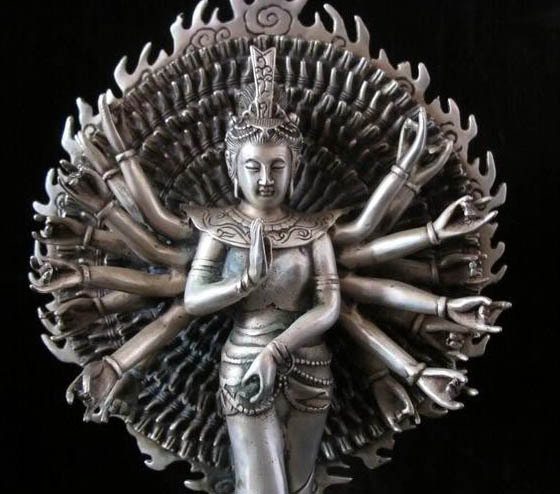
1000-arms Avalokitesvara-kwan-yin Buddha Statue

1000-arms Avalokitesvara-kwan-yin Buddha Statue

In order to activate our good will, our task is to develop love and will in balance and strength. Compassion is not true compassion unless it is active, a definite synthesis of love and will. In fact, the Buddha of Compassion in Tibet is depicted as having a thousand eyes that see the pain in all corners of the universe, and a thousand arms to reach out and extend help to all those who are suffering. To be compassionate isn’t enough; we need acts of compassion.

Continue reading →