Author Archives: Catherine Ann Lombard

When No Money Talks

Assagiolis writing about jail

Assagioli’s writing about his time in jail.

One of my favorite anecdotes from Assagioli’s time in prison is when his prison money was running out. He wrote in intimate detail about this experience in his book Freedom in Jail, under the chapter “An Incident and a ‘Test’”.

From the time of his arrest, Assagioli’s wife Nella was making sure that there was enough money in his prison account to warrant his receiving special treatment. In 1940, Regina Coeli prisoners could buy a more comfortable, private cell and more varied and higher quality food. Continue reading

The Prodigal Daughter

1024px-Rembrandt_Harmensz._van_Rijn_-_The_Return_of_the_Prodigal_Son_-_Detail_Father_Son

Detail from Rembrandt’s “Return of the Prodigal Son”.

I have always loved the parable of the Prodigal Son (Luke 15: 11-32), yet at the same time, struggle with it. The story seems so male in context. A young man returns home repentant and humbled after squandering his inheritance on a life of debauchery. His father is moved with pity, and runs to welcome his son home, clasping him in his arms and kissing him.

“Bring out the best robe and put it on him; put a ring on his finger and sandals on his feet. We will celebrate by having a feast, because this son of mine was dead and has come back to life; he was lost and is found.”

Meanwhile the elder son who always slaved in the fields and obeyed his father grows angry and refuses to enter the celebrations. But the father says:

“My son, you are with me always and all I have is yours. But it was only right we should celebrate and rejoice, because your brother here was dead and has come to life; he was lost and is found.”

What would the story of the prodigal daughter be, and what would her return to the welcoming mother reveal? Continue reading

Snapshot of the Philosophical Library

Note that this blog is an excerpt from my published article: A Snapshot of the Philosophical Library: Florence, Italy, 1922)
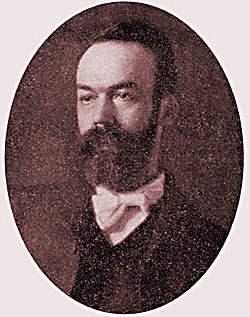

Figure 4 Herron-george-1900

George Davis Herron in 1900.

While conducting research, I often become like Alice and Wonderland, chasing rabbits down the garden path. Most recently, I came across a fascinating book, written by George David Herron (1862-1925), an American clergyman, lecturer, and writer from Indiana. In his book The Revival of Italy, published in 1922, Herron has a beautiful passage describing Roberto Assagioli as the inspiration for the Biblioteca Filosofica. (Philosophical Library) in Florence.

A lively center of philosophical discussion, the Philosophical Library was started around 1903-1905 by those studying theosophy. Wanting to deepen their understanding of Oriental philosophy, library members loaned books, organized classes, conferences and published a bulletin.

Assagioli was one of its more frequent visitors.[1] The Philosophical Library’s intent was to create a “free university for philosophical and religious studies” where the public could come and learn more about the current cultural movements such as Pragmatism, Idealism, and Modernism in a non-academic setting. Continue reading